You've mastered the basics!
You’ve earned this badge! You now know how to fill your growkit and understand the basics of mycelium and fungal biology

Adding Coffee
First growth
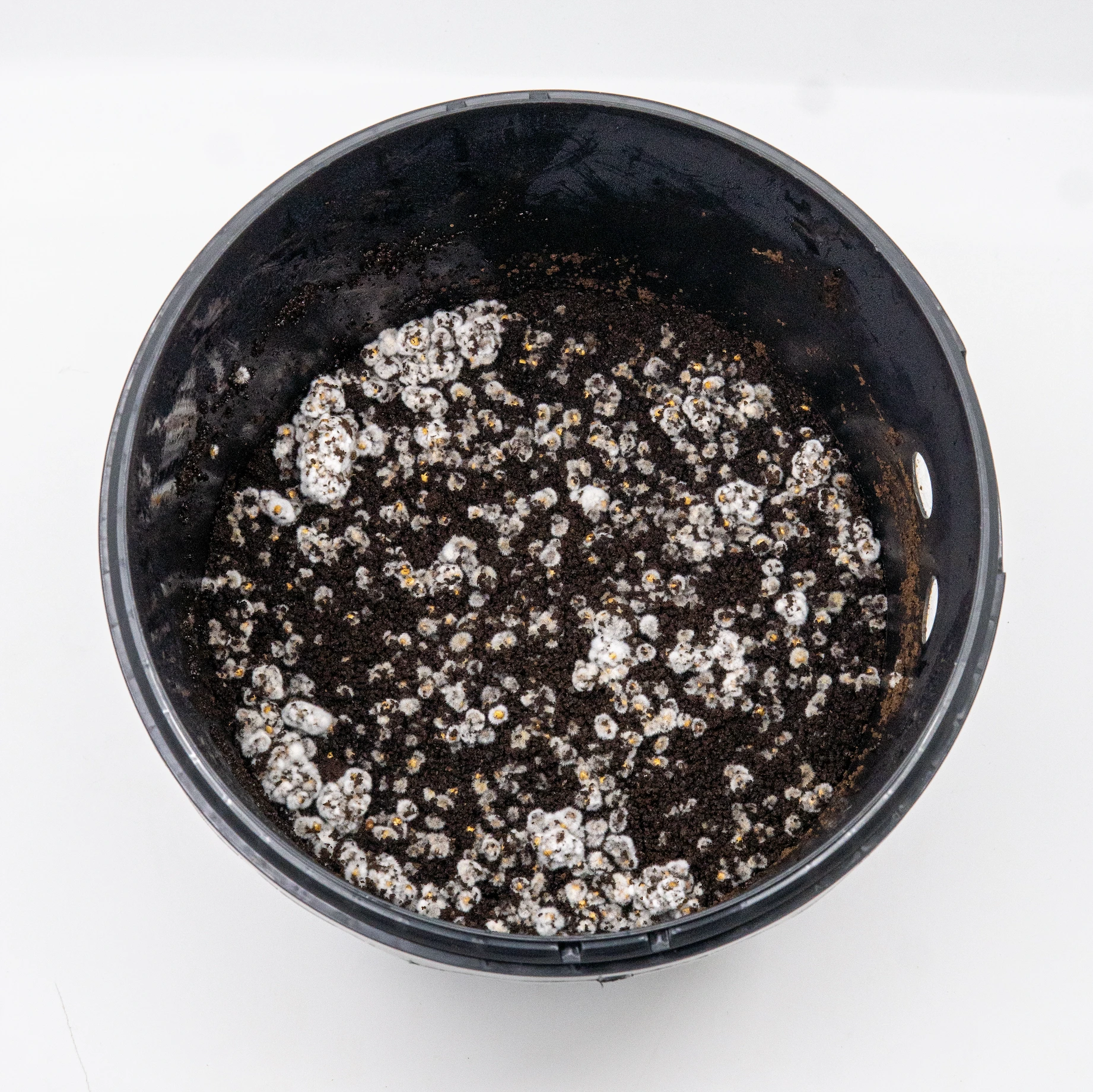
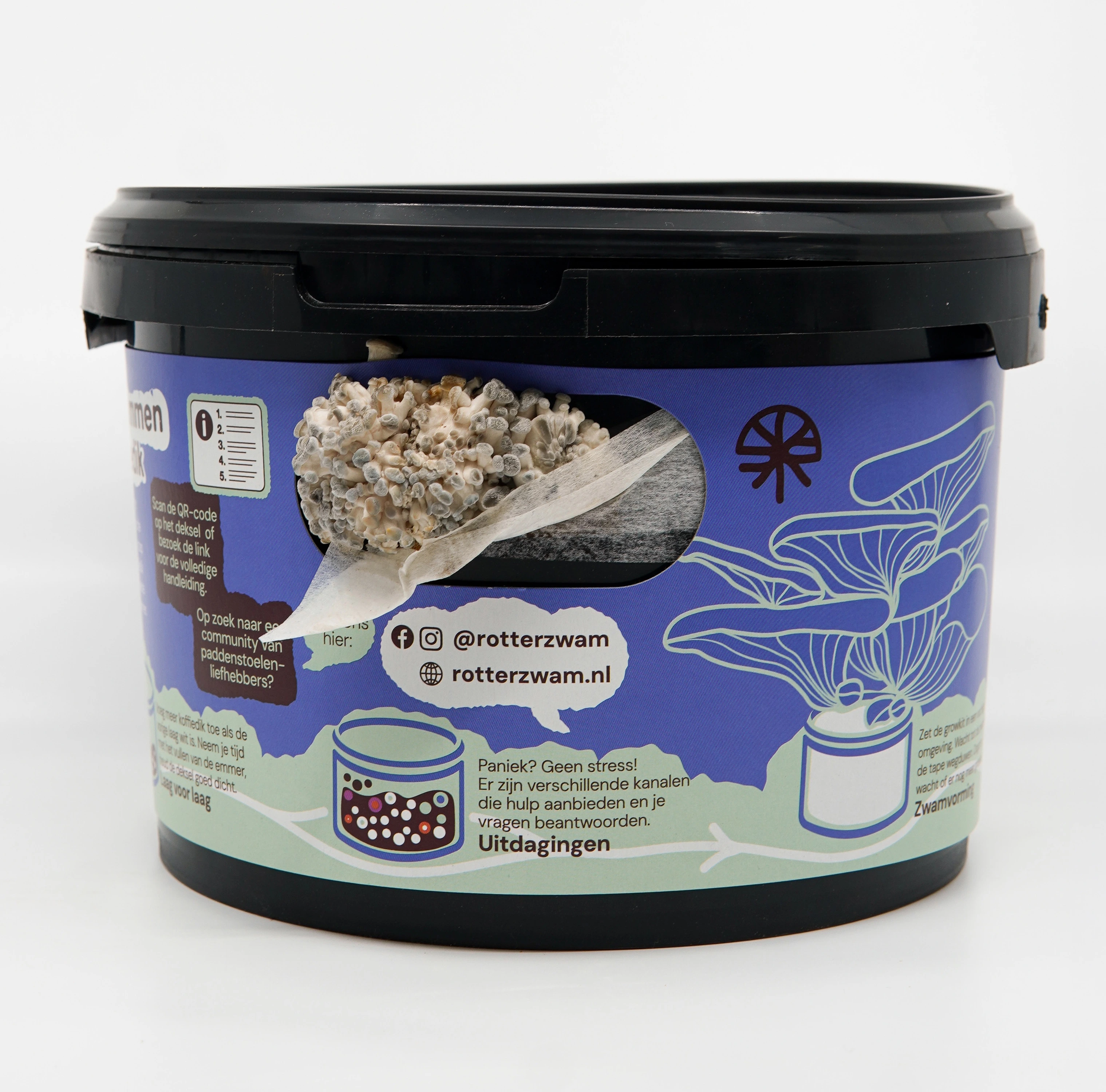
You can see the first white growth appear on the coffee after about five days of starting your growkit. That means that the fungus is starting to grow through the coffee!
This network of white strands is what we call mycelium. Mycelium grows as a branching network that spreads through its food source before producing mushrooms. This is what we call the colonisation phase. When your growkit looks like this, the mycelium is not ready for a new layer of coffee grounds just yet: it needs to grow a bit more until the coffee grounds are less visible.
Water droplets
If you have water droplets on the sides of the bucket, it is a sign that the coffee you used has the right amount of water. When you don’t see these droplets, you can add some water to it.
Preferably with a plant spray to distribute it evenly and to not damage the mycelium. Also make sure to put the bucket in a moist environment, to close the lid properly and to leave the tape on the holes. Together, this makes sure that enough moisture is kept inside.
after a few days
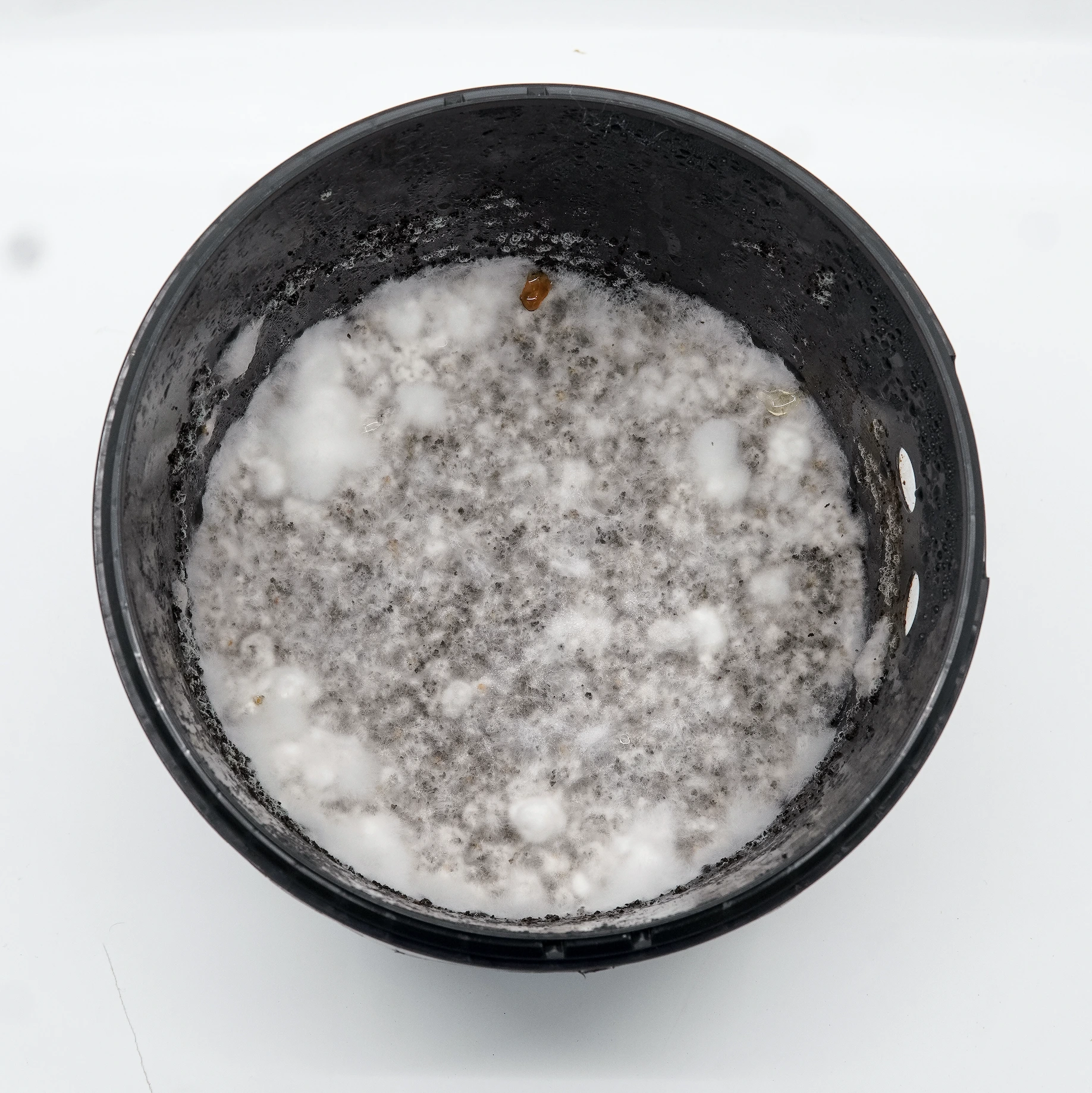
4-7 days
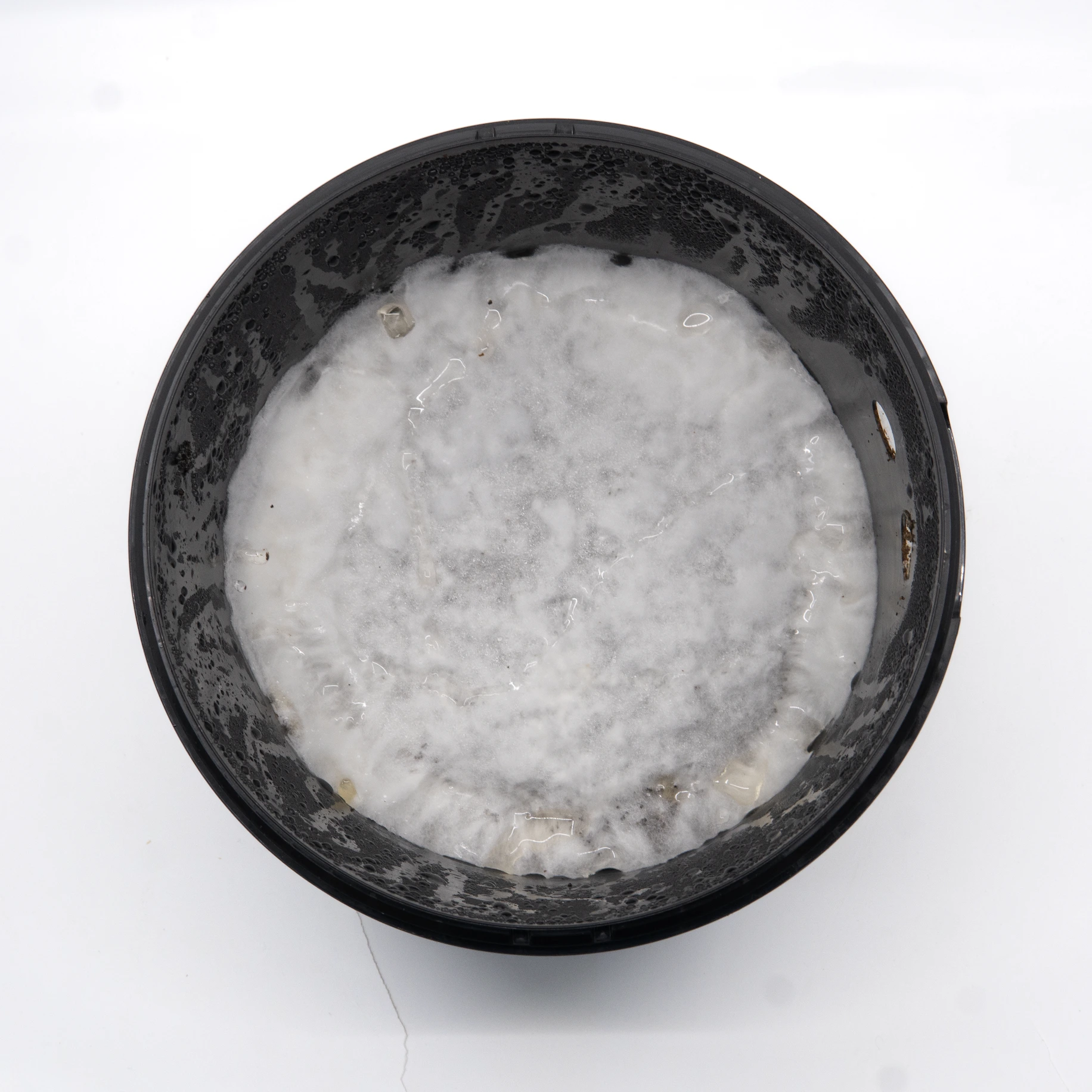
after a week

Adding a new layer
When the mycelium is fully grown through the layer of coffee grounds, it should look like the image.
You should not see any brown coffee anymore, and the mycelium bright and white. Now you can add a layer of about 1-2 cm of fresh coffee grounds. You can add less, but not more. If you add too much, the mycelium will not get enough oxygen and struggles to grow. It also increases the chances of other fungi to grow in the bucket.
To make sure the coffee grounds have the right moisture level, do the spoon check again as explained in the previous step.
Do not stir the mycelium again
Layering works better than mixing at this stage: it reduces disturbance and helps mycelium colonise substrates evenly. The mycelium will grow upwards on its own.
Not the biggest coffee drinker?
What are fungi?
Fungi are a vast and ancient kingdom of life that quietly underpin nearly all ecosystems on Earth. The main body of a fungus is not the mushroom we recognize, but a fine white network called mycelium that grows through soil, wood, or organic material.
More than 90% of a fungus exists in this hidden form. The mushroom itself is only a fruiting body, a short-lived structure created to produce and release spores, much like an apple growing on a tree.
Different substrates
In nature, fungi act as powerful recyclers. They break down dead plants and organic waste and turn it back into nutrients that can be reused by ecosystems. Some fungi are known as primary decomposers, meaning they can grow directly on fresh organic material.
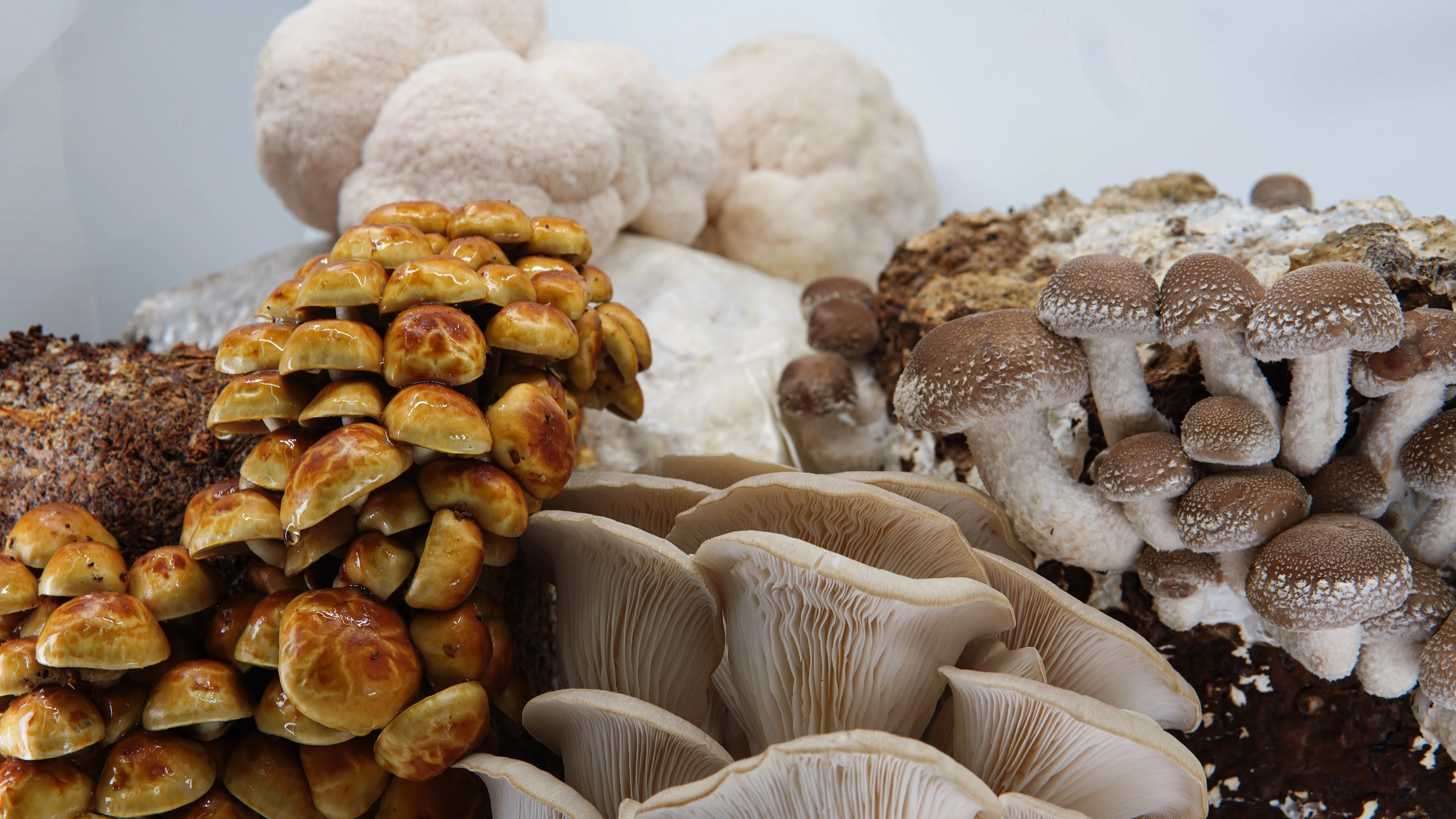
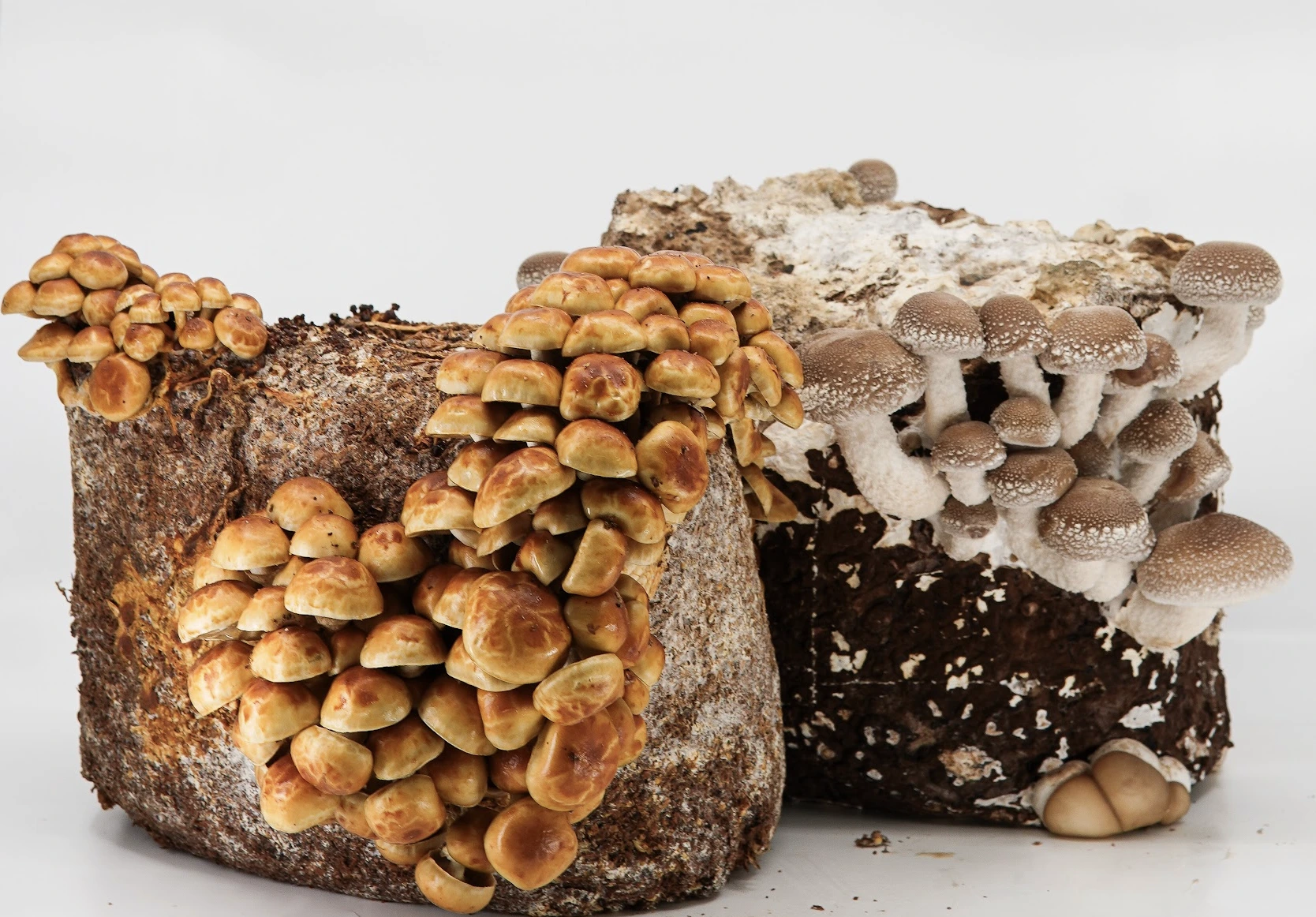
Oyster mushrooms belong to this group, along with shiitake, nameko, Lion’s Mane, and many other edible or functional mushrooms. These fungi are able to digest lignin and cellulose, the tough plant fibers that give wood, straw, and agricultural waste their rigid structure.
This is why materials such as wood chips or coffee grounds are suitable substrates for growing oyster mushrooms. Other fungi, such as porcini or the white button mushroom, rely on more processed material.
White button mushrooms are grown on horse manure because the straw or hay must first be broken down in the horse’s digestive system before the fungus can access the nutrients.
Fungi in daily life
Fungi are also deeply embedded in daily human life, often in ways people do not immediately recognize. Yeasts, a type of fungus, are essential for making bread, beer, wine, and many fermented foods.
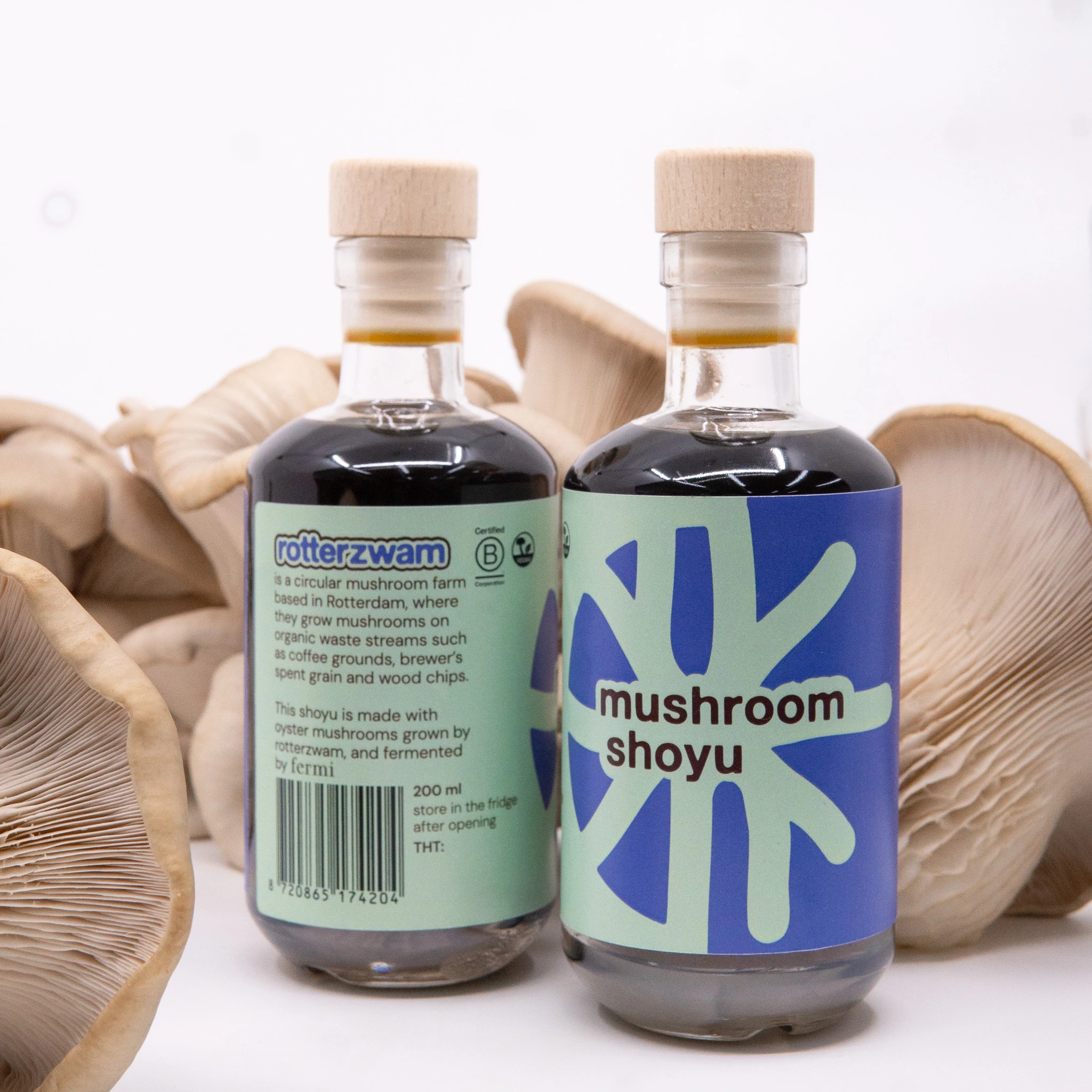
Molds are used to produce cheeses such as blue cheese and Camembert, as well as soy sauce, miso, and tempeh. Fungi are also crucial in medicine, with antibiotics like penicillin and many cholesterol-lowering drugs derived from fungal compounds.
Beyond food and medicine, mycelium is increasingly used to create sustainable materials such as packaging, insulation, leather-like textiles, and even building components. In all these forms, fungi quietly support modern life, transforming simple organic materials into products we rely on every day.
Using fungi
By understanding how fungi work in nature, we can copy these systems in human environments. Using fungi to convert organic waste into food and materials mimics natural nutrient cycles and helps reduce waste.
When you grow mushrooms at home, you are not just producing food, but participating in a circular process that reflects how ecosystems function in the wild. At rotterzwam, we copy that system in the city in order to create a circular economy and reduce food waste.