Icon that shows a close icon
Badge that says Close the loop by composting spent substrate

You've closed the loop!

You’ve earned this badge! You now understand how to compost your spent substrate and return nutrients back to nature!

Another Go!

Illustration that shows a badge with confetti

More flushes & restarting

Congratulations on your first harvest! But here's the good news: your bucket isn't done yet.

After harvesting, the mycelium is still alive and ready to produce more mushrooms. You can do this in two different ways: either wait for more flushes, or restart your growkit. On this page, we explain how to do these steps.

What does a flush mean?

A flush is a complete cycle of mushroom growth from pins to harvest. Think of it like a fruit tree: after picking the first apples, the tree can produce more fruit if conditions remain favorable. Your mycelium works the same way.

An action badge that tells you to do something

Option 1: preparing for the next flush

After you've harvested your first cluster and cleaned away the leftover mushroom pulp from the hole, you can help the fungi produce a next flush.

The mycelium has lost moisture during fruiting, so you need to add a small amount of water to rehydrate the substrate.
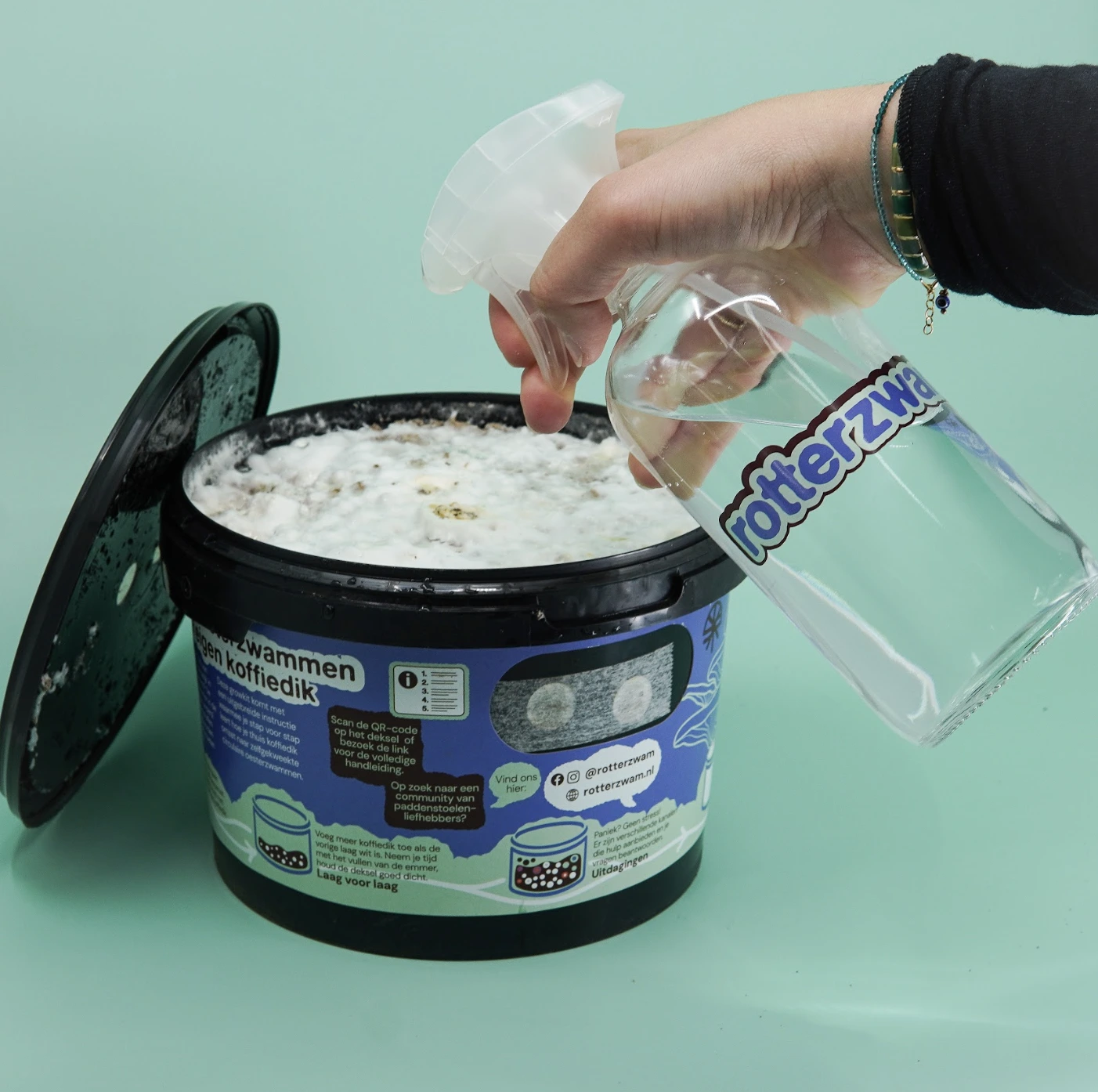
Use a plant spray to mist the exposed mycelium through the holes from the outside and spray directly into the bucket.

If you have some space left in your bucket, you can also add a thin layer (about 1 cm) of fresh, moist coffee grounds. This provides additional nutrients for the fungi. Then close the lid and wait. Within 1 to 2 weeks, you can see new pins emerging, either from the same holes or from different ones.

If no pins are emerging, you can give the mushrooms another cold shock, just like in the ‘Growing & Harvesting’ step.

Hand spraying water from a transparent bottle labeled rotterzwam onto the growkit with white mycelium

What are the conditions for more flushes?

Option 2: restarting

The growkit is made out of 100% recycled plastic. Unfortunately, we cannot make the bucket out of organic materials, because then the material would be eaten by the fungi, and eventually break down. The pro of using plastic is that you can use it over and over again, and it holds water and moisture best.

One of the beautiful things about the rotterzwam grow kit is that the plastic bucket is designed for multiple uses. Reusing your grow kit multiple times dramatically reduces waste and maximizes resource efficiency. A single bucket can theoretically produce mushrooms for years if properly maintained, turning hundreds of cups of coffee waste into kilograms of fresh food.

This is circularity at the household level: regenerative, local, and delicious. Growing mushrooms doesn't have to be a one-time experience: you can restart your bucket and keep the circular cycle going indefinitely. However, restarting requires some special attention to give your mycelium the best chance of success.

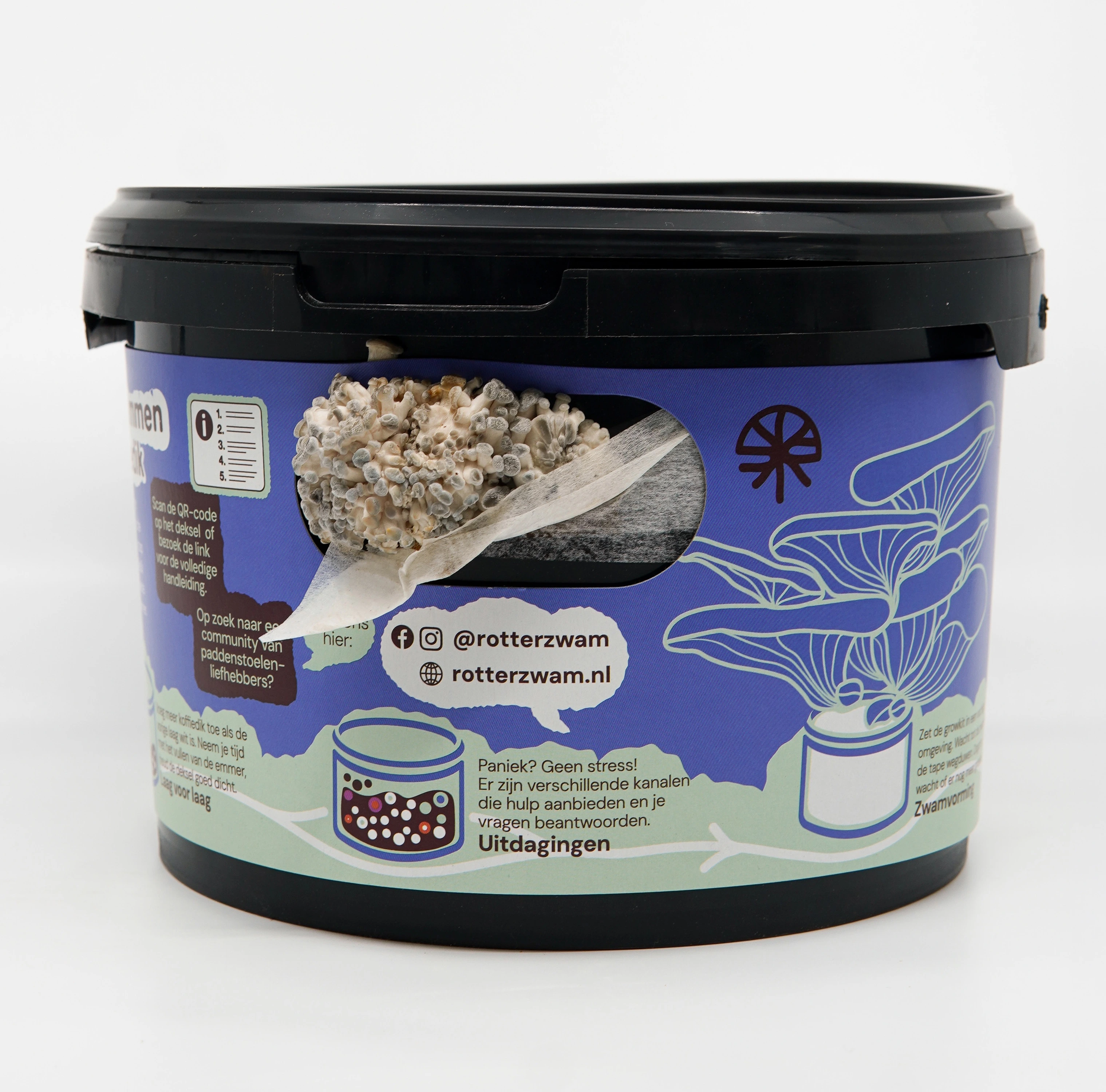
An image of the growkit
An action badge that tells you to do something

How to restart your growkit:

After your second or third flush, when mushroom production slows down or stops completely, it’s time to refresh the system. Here’s the step-by-step process:


Remove 80% of the bucket contents

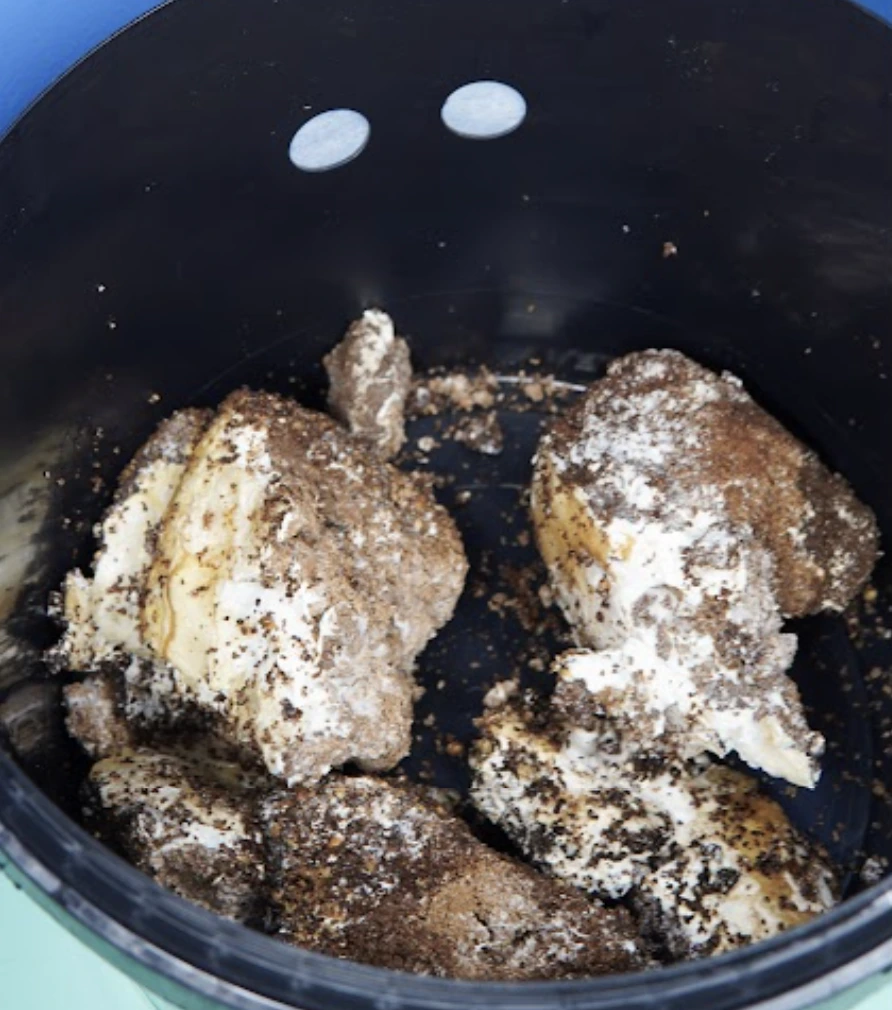
Scoop out most of the spent substrate (old coffee grounds and exhausted mycelium), leaving behind about 20% of the healthiest, whitest mycelium in the bucket. This remaining mycelium will serve as your “starter culture” for the next round.

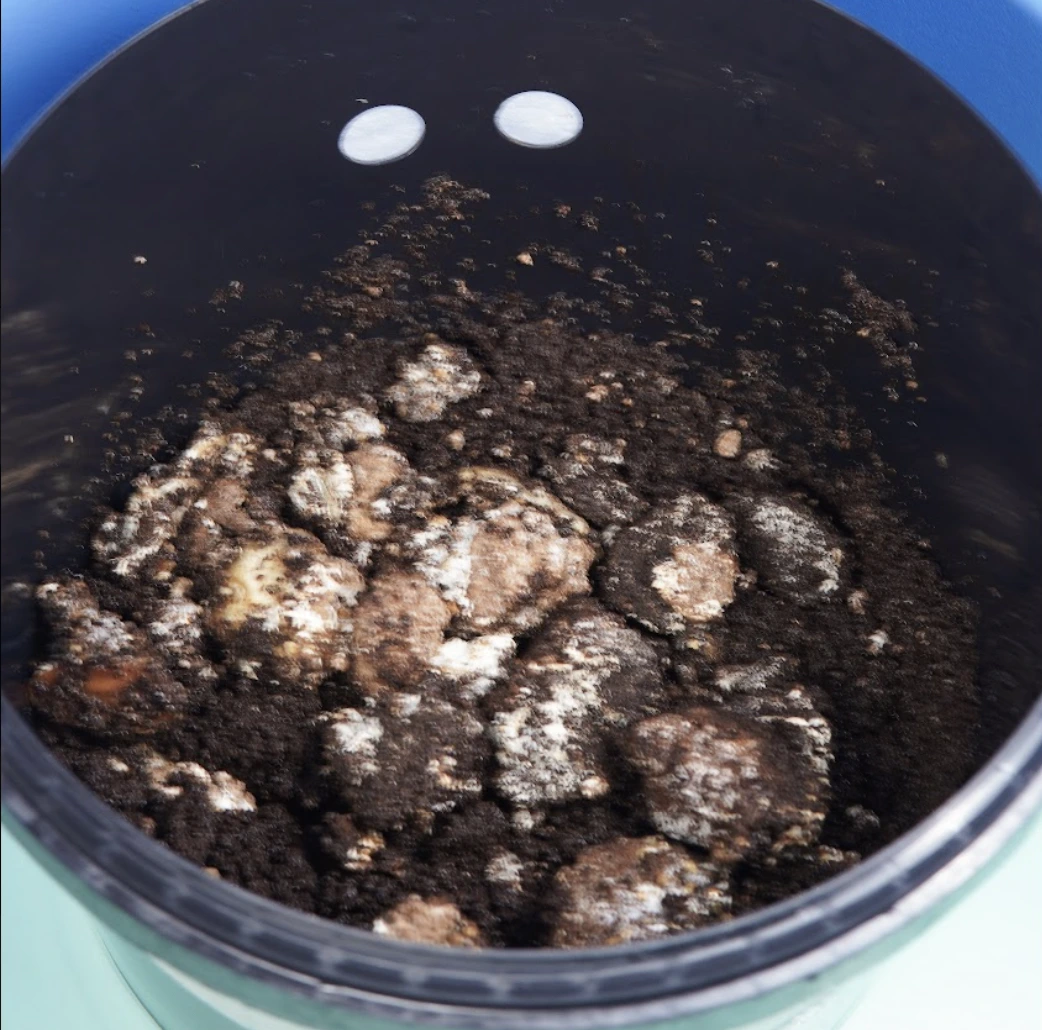
Growkit containing 20% of white mycelium left
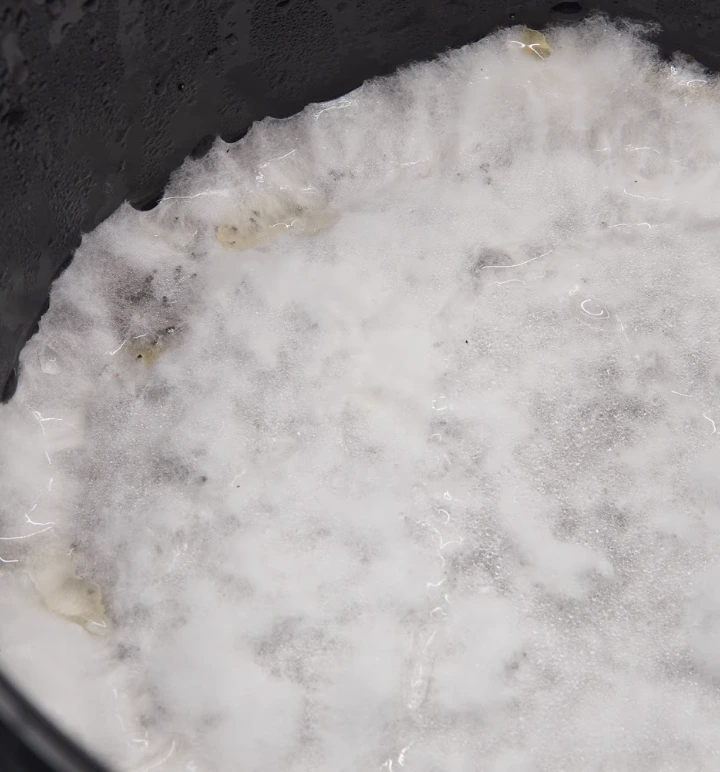
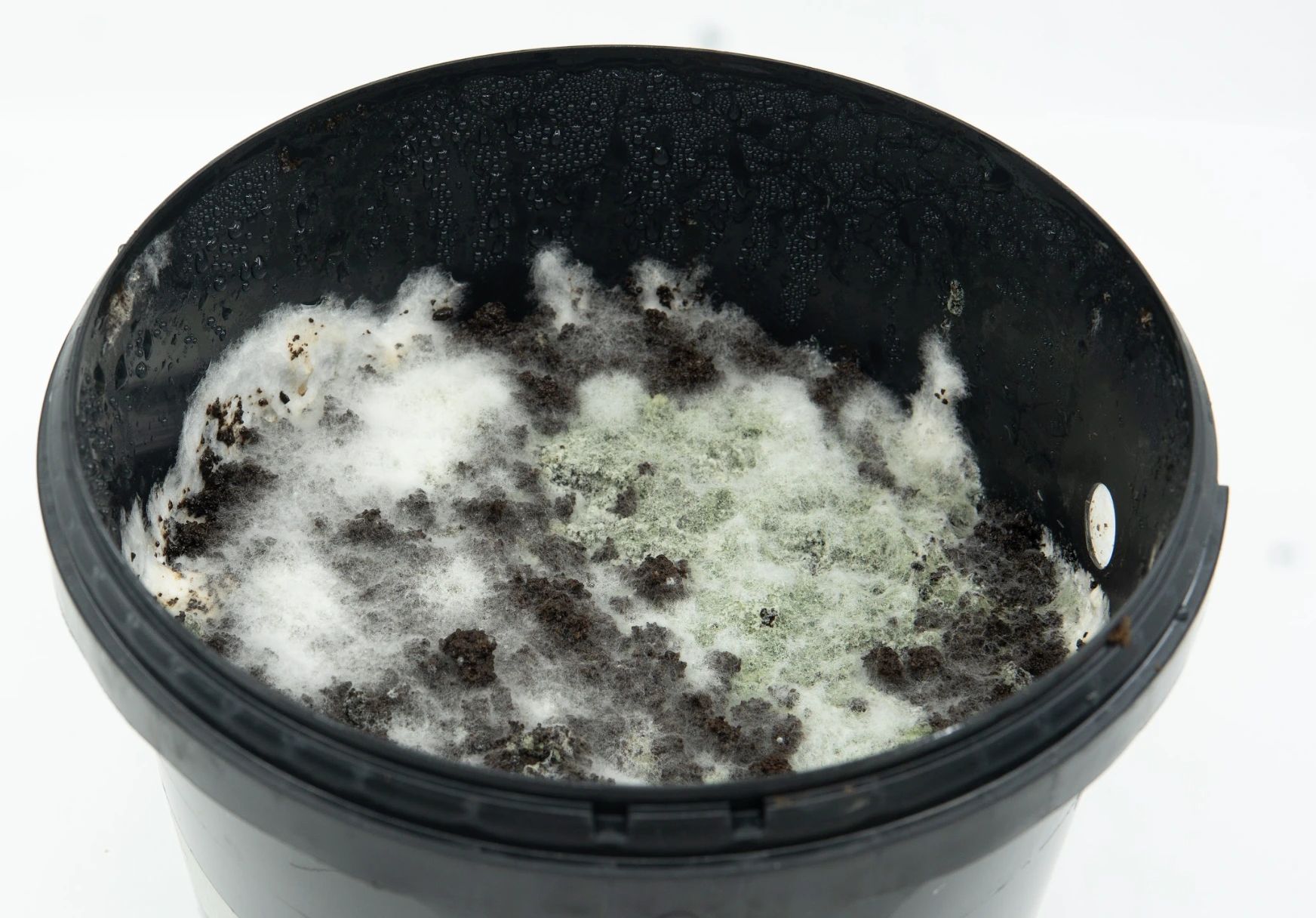
Close-up of white, fluffy mycelium growth in the growkit, indicating healthy fungi development.

Healthy mycelium looks like this:

Bright white colour with a dense, rope-like texture.

Fresh smell: earthy and mushroom-like, not sour or rotten.

No discolouration: avoid keeping any sections with green, orange, black or pink spots. The brown or orange liquid (metabolites) you might see is normal, but you don't need to keep it for the restart. Focus on the cleanest, whitest patches of mycelium.

Active growth: mycelium that still looks vibrant, not thin or yellowed.

Begin adding fresh coffee grounds

Follow the same process from Step 1 and Step 2. Start with about 100g of moist, cooled coffee grounds mixed with the remaining mycelium, then layer new grounds every time the mycelium fully colonizes the previous layer. You're essentially "rebooting" the bucket with a head start from existing mycelium.

The restarted mycelium mixed with new coffee grounds

What happens over multiple restarts?

As you reuse the mycelium over and over, it will gradually lose vigor. This is natural. Like any living organism, mycelium ages. You'll notice:

Slower colonization: it takes longer for white mycelium to spread through new coffee
grounds

Increased contamination risk: weaker mycelium struggles to outcompete green molds and bacteria

Smaller yields: mushroom clusters may be less abundant or slower to develop

Starting completely fresh:

If your mycelium is exhausted or heavily contaminated, you can start over with a new spawn bag and new tape. These supplies are available on the rotterzwam webshop. 


Restarting with fresh spawn and new tape gives your bucket another new life. Plus, you’ll already know exactly what to do: you’re a mushroom-growing pro now!

Go to the Shop
Go to the Shop
Primary Btn IconPrimary Btn Icon
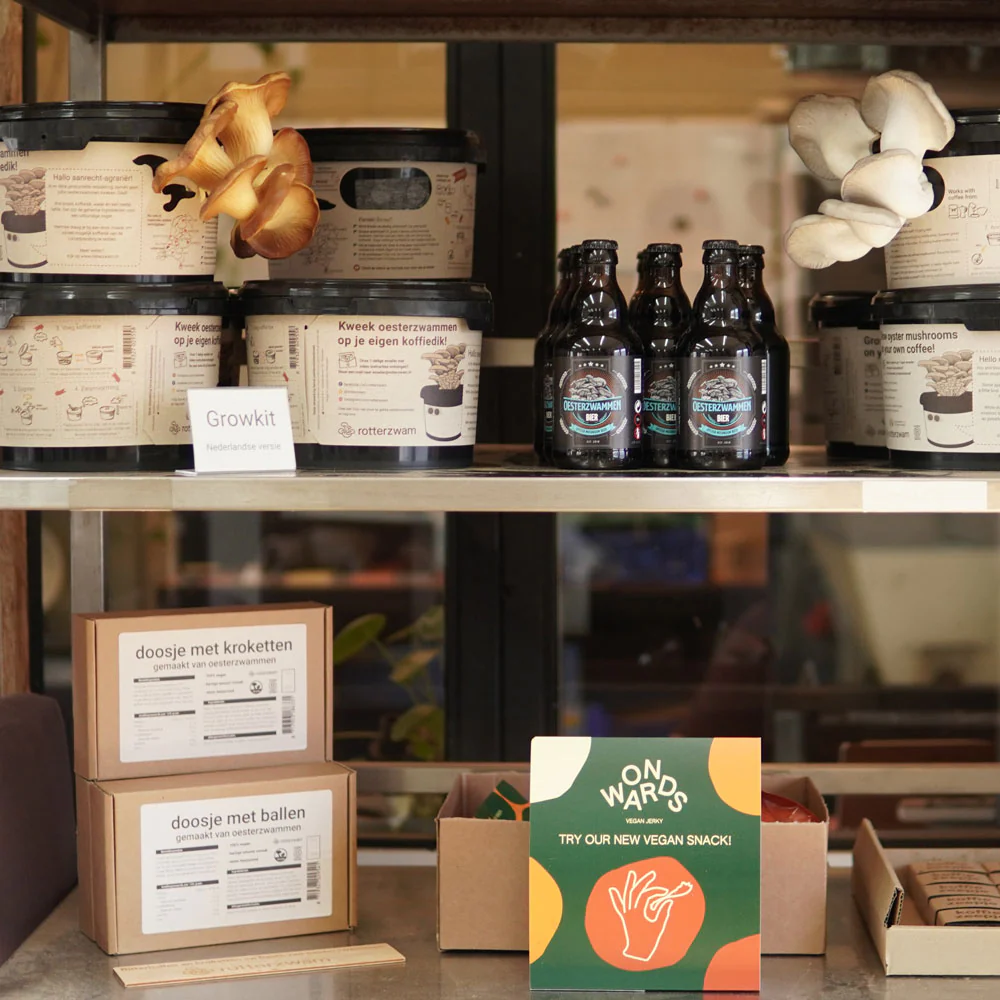
Photo of the rotterzwam shop

Discount code 15% off

As a special bonus for experienced growers like you, use the discount code “GrowMore!” at checkout to support your continuous growing journey.

Regenerative by design

So, what do you do with the 80% of substrate you removed from the bucket? Don't throw it away! The mixture from your grow kit (used coffee grounds mixed with exhausted mycelium) is what we call "spent substrate" and it's an excellent soil amendment for your garden.

If you have a vegetable garden, flower beds or houseplants. Mix the spent substrate directly into the soil.


No garden? No problem.

If you don’t have outdoor space, you can also add it to your compost bin. The mycelium will continue breaking down organic matter in your compost, speeding up decomposition.

Many municipalities compost this material and use it in parks and public gardens, so your coffee grounds still complete the circular journey, just on a larger scale

You can also read our blog about returning to the soil:

Go to the Blog
Go to the Blog
Primary Btn IconPrimary Btn Icon

Nutrient-rich:

Coffee grounds are high in nitrogen, phosphorus, and potassium: the building blocks of healthy plants

Improves soil structure:

The decomposed mycelium adds organic matter that helps soil retain moisture and improves aeration

Stimulates soil life:

The mycelial network encourages beneficial bacteria, fungi, and earthworms in your garden

pH-balanced:

Coffee grounds become less acidic as they decompose, making them safe for most plants

Want more mushroom compost?

If you have a garden and want to supercharge your soil, rotterzwam regularly has bags of spent substrate available for free pickup at our Rotterdam facility.

Sign up on our website to get notified when fresh batches are ready. Urban gardeners and community gardens love this stuff. It's free, local, and packed with nutrients.

Go to rotterzwam
Go to rotterzwam
Primary Btn IconPrimary Btn Icon
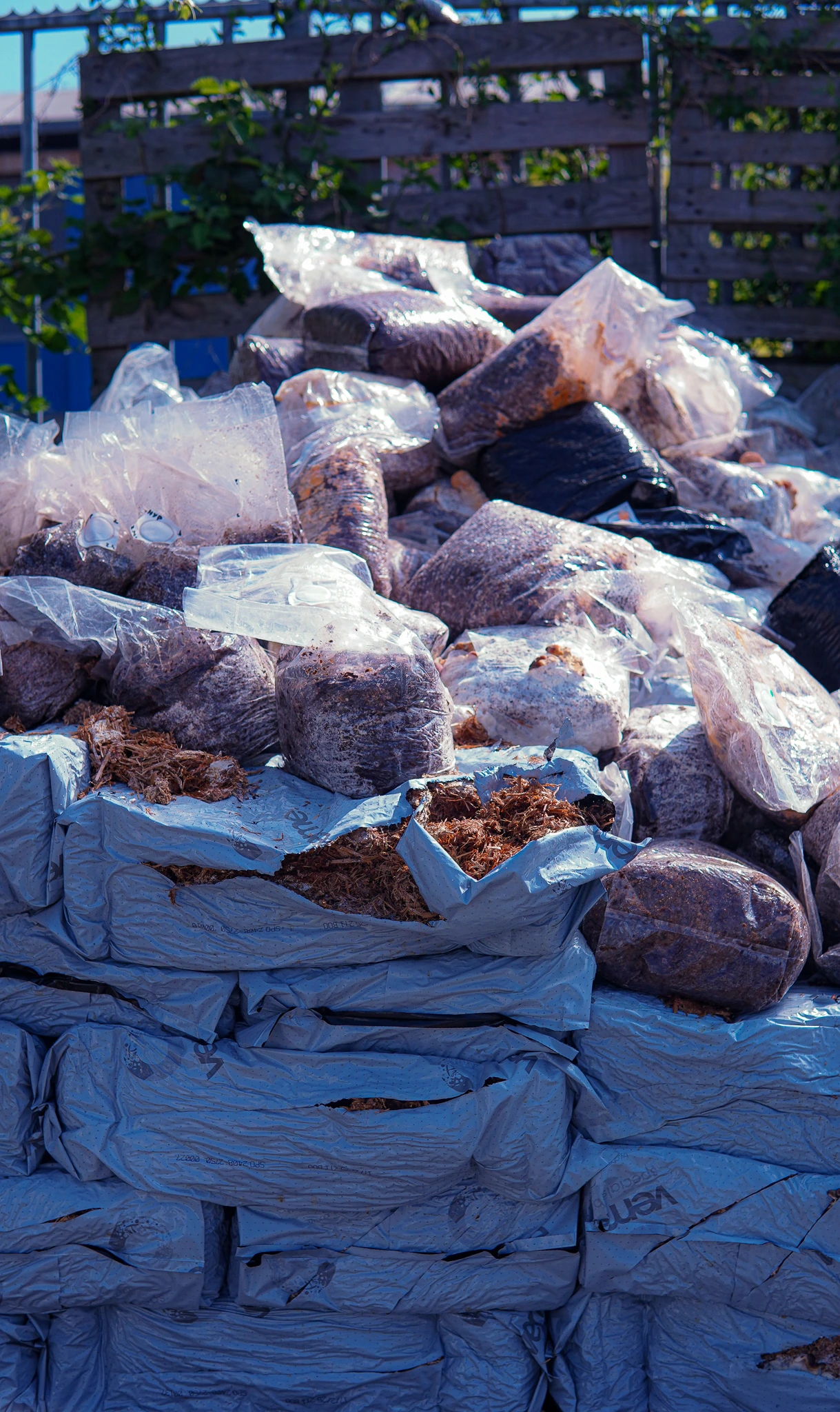
Stack of plastic bags filled with used substrate

Your Impact

Take a moment to celebrate: you’ve just completed a full circular cycle! You’ve turned waste into food, learned a new skill, and contributed to a more local, sustainable food system. Let’s put some numbers to your achievement.


Based on your harvest and the coffee grounds you used, here’s an estimate of the positive impact you made:

Coffee grounds diverted from landfill
Faq IconFaq Icon
Carbon footprint reduced
Faq IconFaq Icon
Food miles eliminated
Faq IconFaq Icon
Waste transformed
Faq IconFaq Icon
Water saved
Faq IconFaq Icon

Total Impact

You diverted waste, saved water, reduced carbon emissions, and produced fresh, local, nutritious food, all from your kitchen counter. That’s the power of circular thinking!

Keep growing with rotterzwam

rotterzwam is more than a mushroom farm. We’re a social enterprise building circular food systems in Rotterdam.

By purchasing grow kits, attending our programs, or spreading the word, you’re supporting: 


Local, sustainable food production in urban environments


Social impact: employing people with distance to the labor market


Education and awareness about circular economy
principles

Go to rotterzwam
Go to rotterzwam
Primary Btn IconPrimary Btn Icon
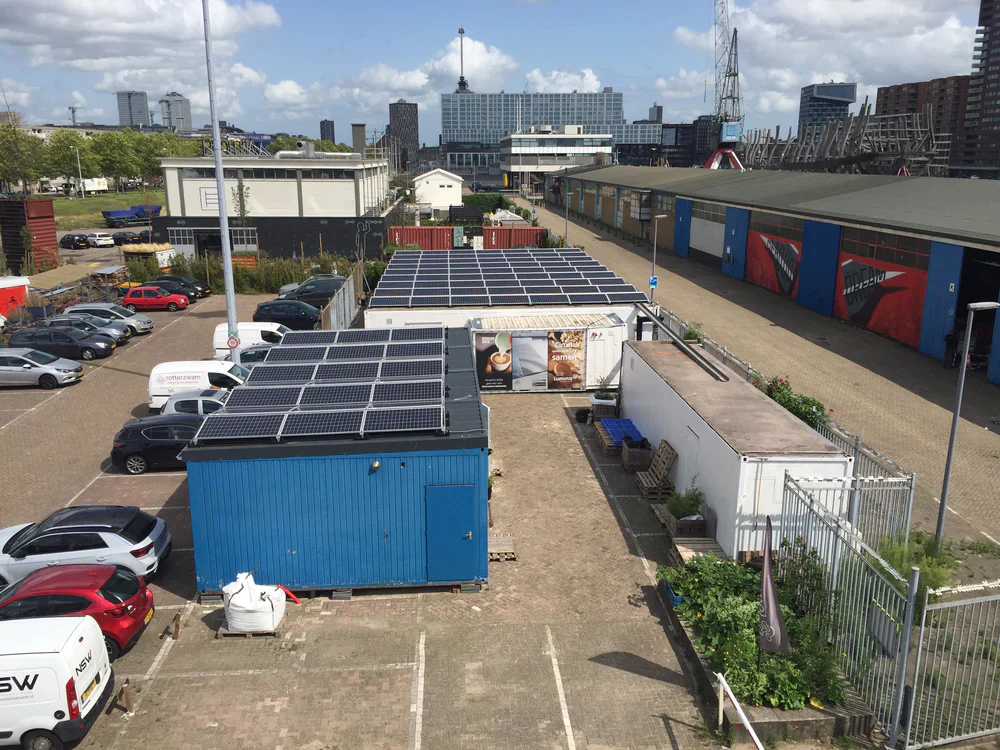
A photo from above of rotterzwams location
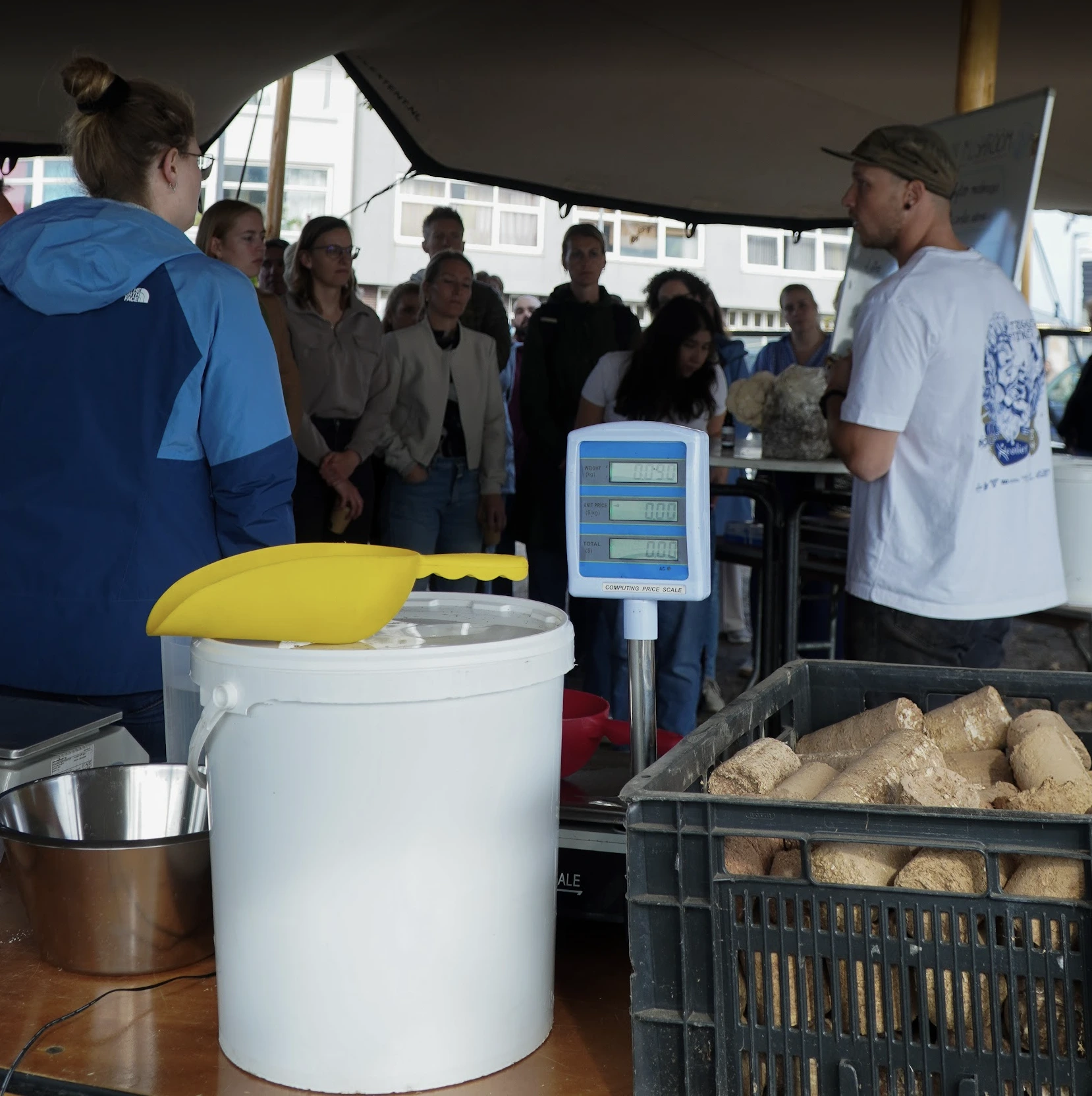
Group of people listening to a man in a white shirt during a workshop

Learn more through our educational programs

You’ve mastered the basics of mushroom cultivation, but there’s so much more to explore. If you’re hungry for deeper knowledge or just want to grow even more mushrooms, rotterzwam offers several learning opportunities:

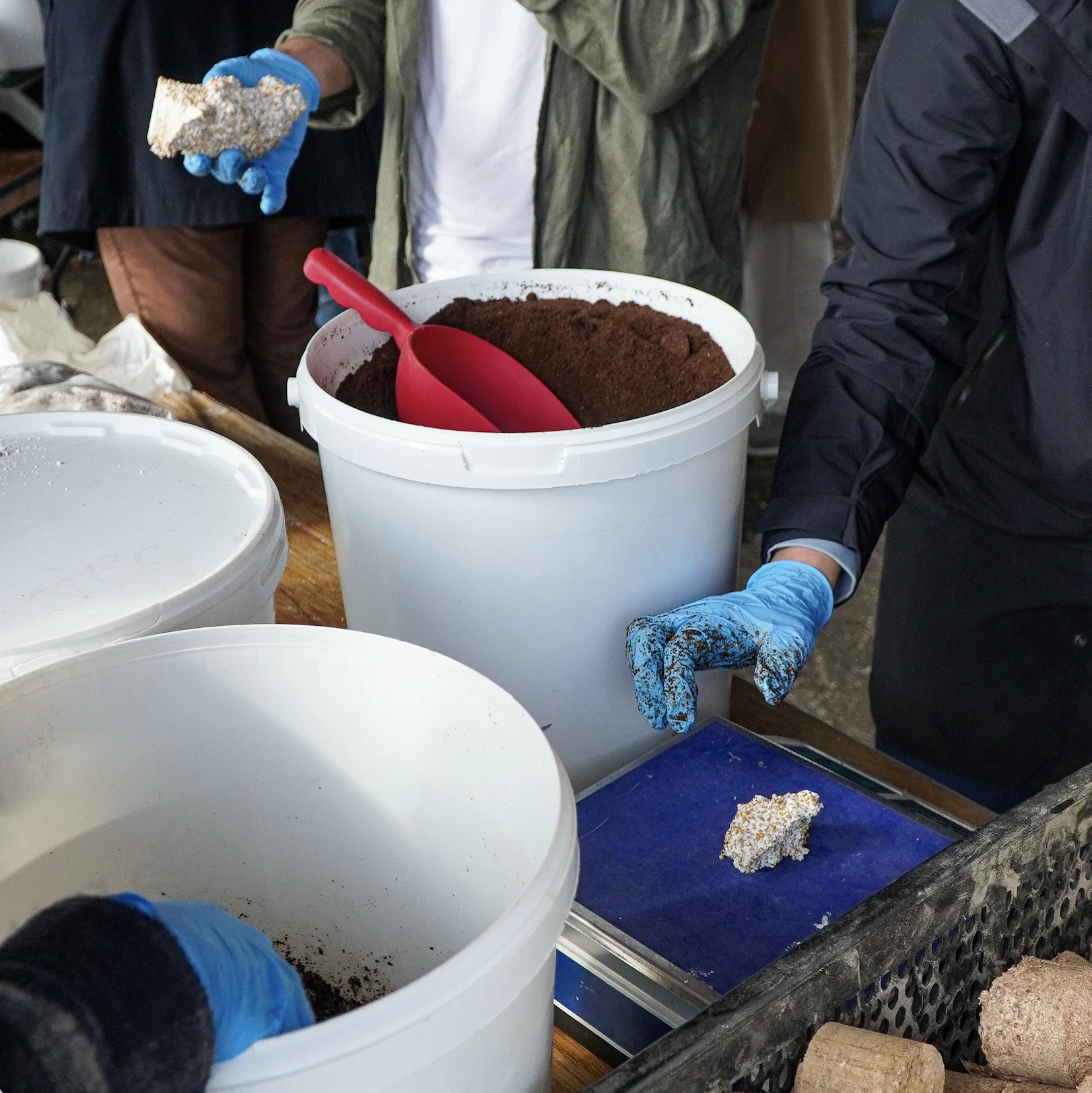
People wearing blue gloves are handling substrate and mushroom

Learn about our Mushroom Workshops

Hands-on sessions where you'll learn advanced cultivation techniques, and learn about growing other organic waste streams.

Perfect for beginners who want structure or experienced growers who want to level up.

Here, you can ask all the questions directly to the most experienced circular mushroom growers. And you go home with bags of oyster mushroom substrate.

Read more
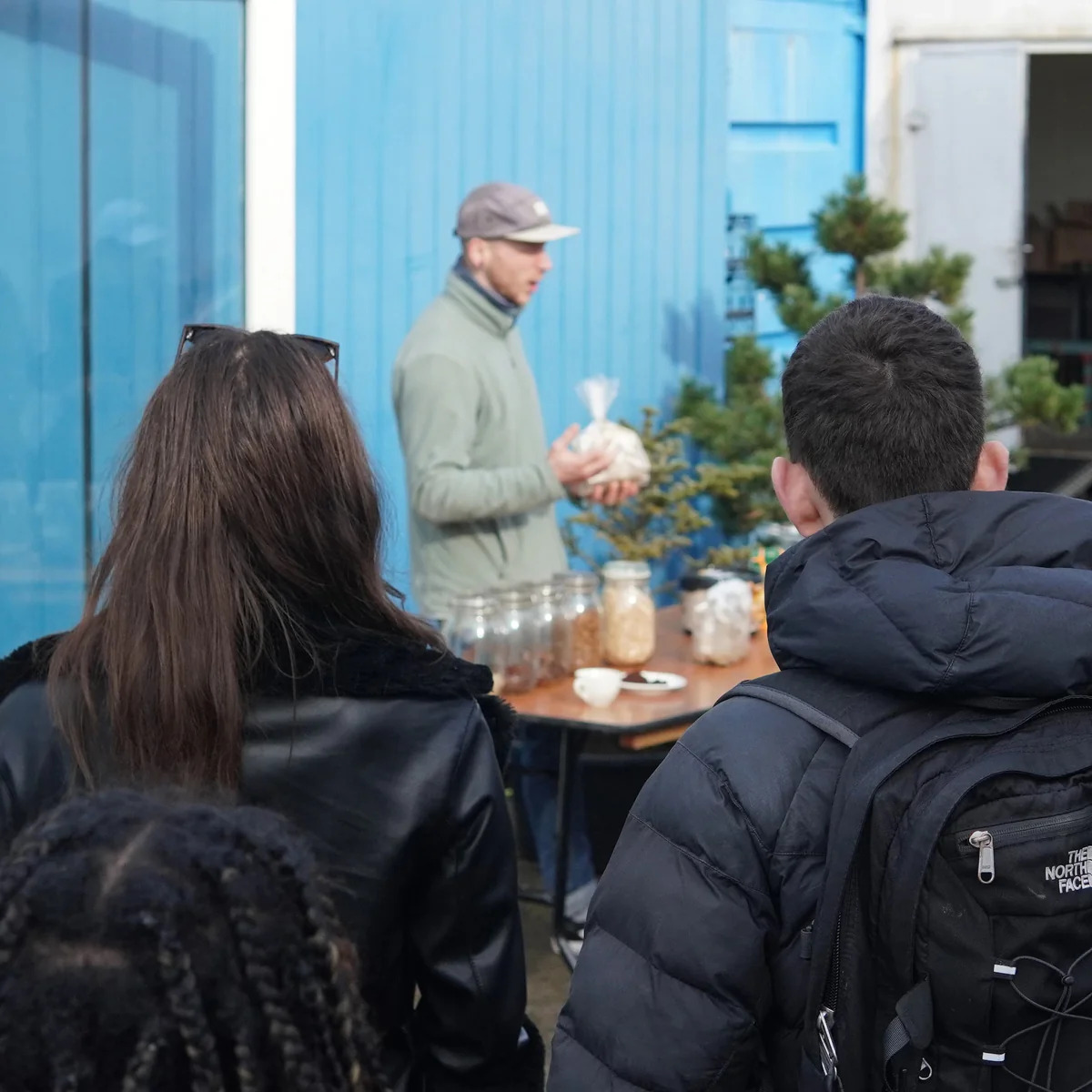
Man wearing a cap holding a bag, speaking to a small audience near a table with jars.

See what our Farm Tours include

Visit our urban mushroom farm in Rotterdam and see commercial-scale circular cultivation in action.

Learn how we transform coffee waste and other organic waste streams into mushrooms every week. It's inspiring, educational, and delicious (if you choose the tasting!)

Read more
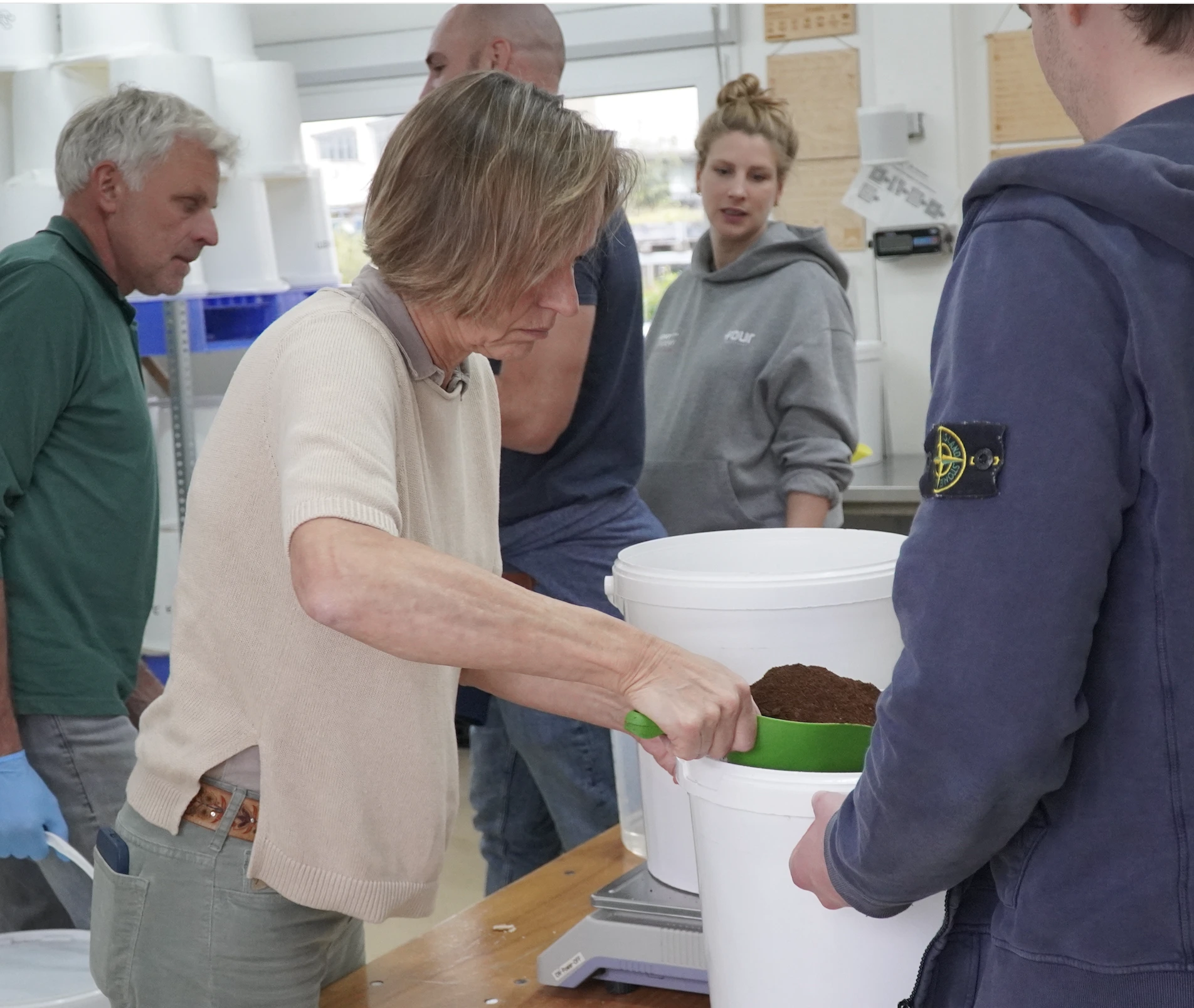
People working together indoors scooping coffee grounds into large white buckets.

Check the Mushroom Master Program

Our intensive course for serious enthusiasts. Dive deep into mycology, substrate science, sterile technique, and even business models for mushroom farming.

Whether you dream of starting your own urban farm or just want to become a fungi expert, this program will transform your understanding.

Read more
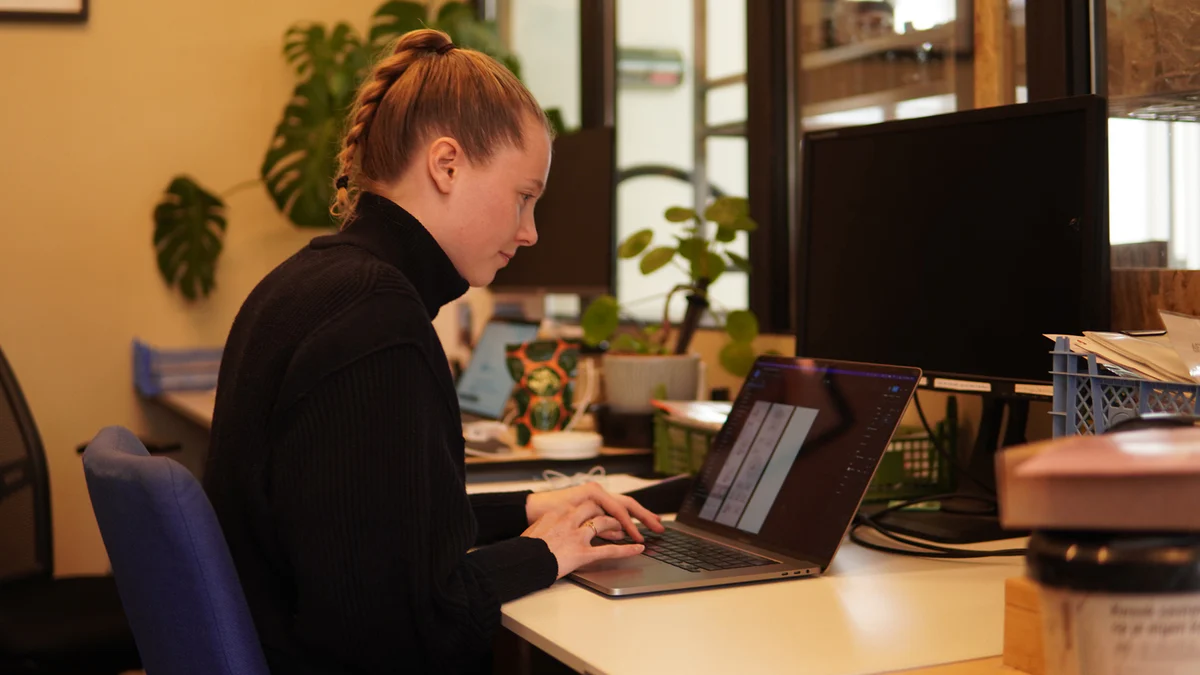
Woman with braided hair typing on a laptop at a desk in a modern office.

Look at our Online Resources

Can't make it to Rotterdam?
Check out our blog, video tutorials, and e-learning modules on the Rotterzwam website.

We regularly share recipes, growing tips, and stories from our community of growers.

Read more

Final thoughts: you're part of the movement

Growing mushrooms at home might seem like a small act, but it’s part of a much larger shift toward regernative, circular, local food systems.

Every time you save coffee grounds, every harvest you share with friends, every meal you cook with your home-grown oysters, you’re proving that sustainability can be delicious, accessible, and fun.

You've learned to:

Badge that says How to store the growkitBadge that says Understanding mycelium & fungal biologyBadge that says Troubleshoot problems & adapt to conditionsBadge that says Turn waste into foodBadge that says Harvest, store & cook gourmet mushroomsBadge that says Close the loop by composting spent substrate

That’s not just growing mushrooms: that’s systems thinking in action.


Thank you for being part of the rotterzwam community. Keep growing, keep learning, and keep sharing your journey. Tag us on Instagram and Facebook @rotterzwam with #rotterzwam and #rotterzwamgrowkit. We love seeing your successes (and even your failures: they’re all part of learning!).