You can handle challenges!
You’ve earned this badge! You now know how to identify problems and adjust your growkit to keep it growing!

Challenges
Problems or no problems?
This step focuses on how to handle the different challenges that can occur during the growing process. But in most cases, you won’t need to fix anything.
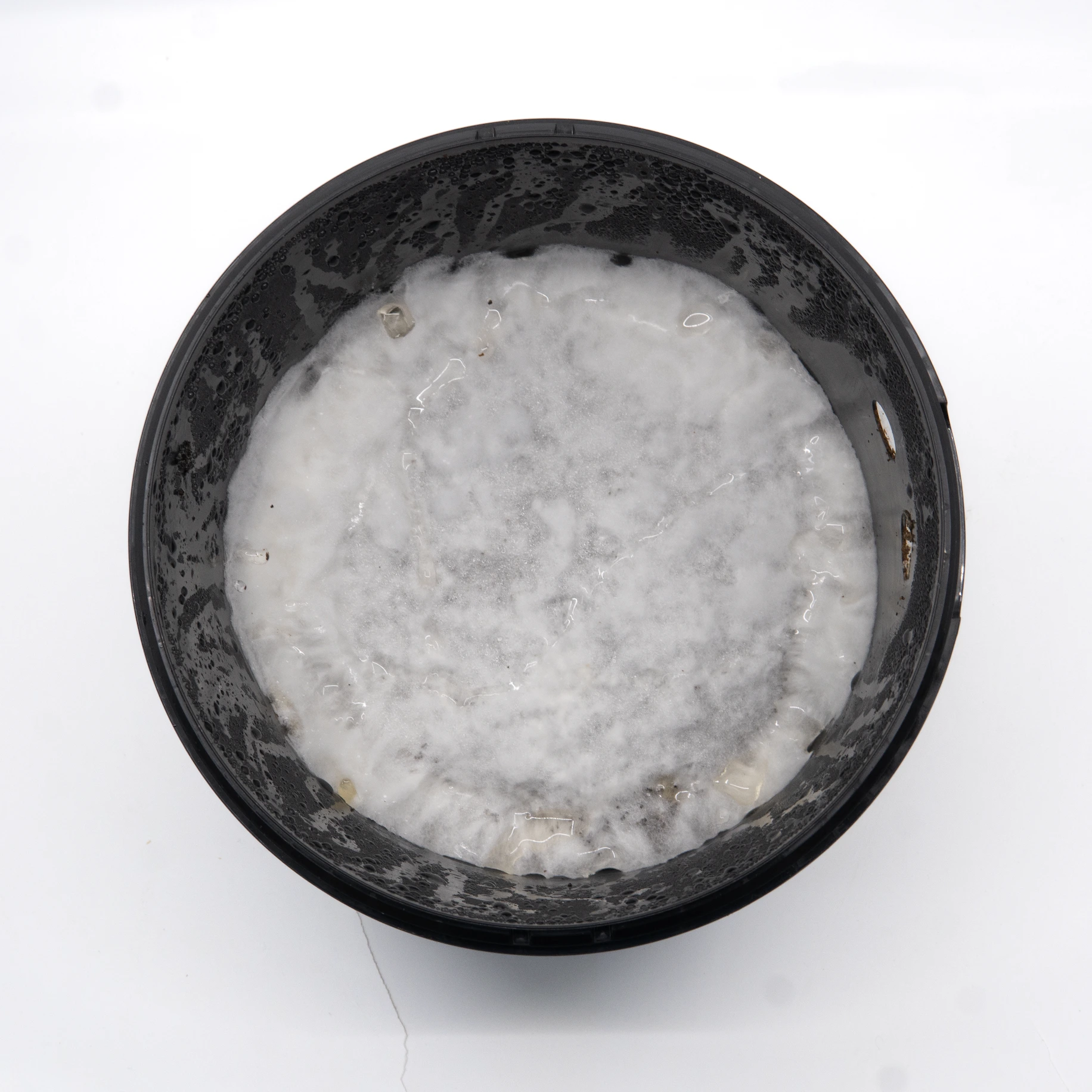
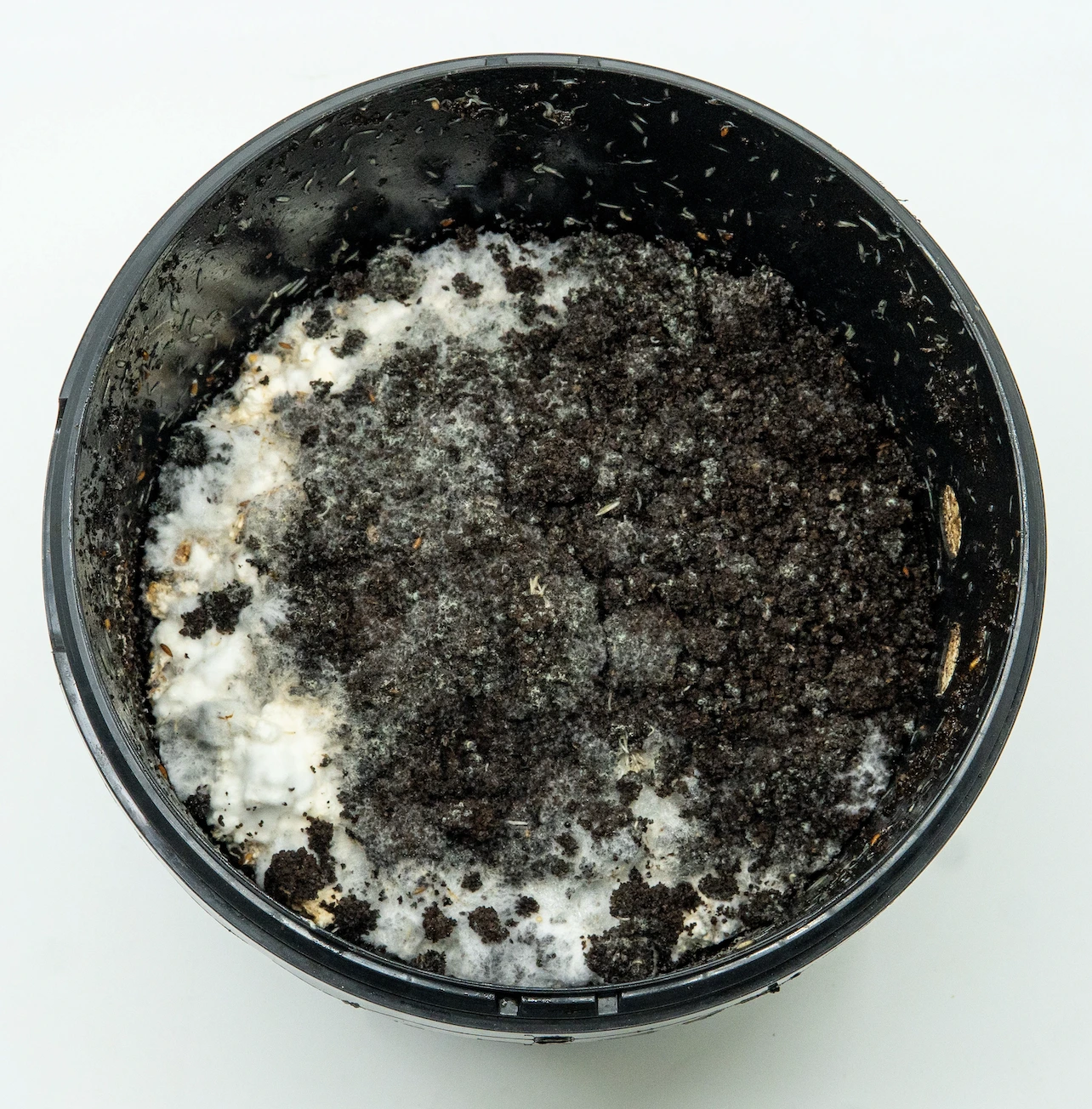
If your bucket is filling up with white mycelium and growing steadily without any strange smells, then everything is going as it should. Keep going until the bucket is completely full. This stage is often slow, but that’s a good sign.
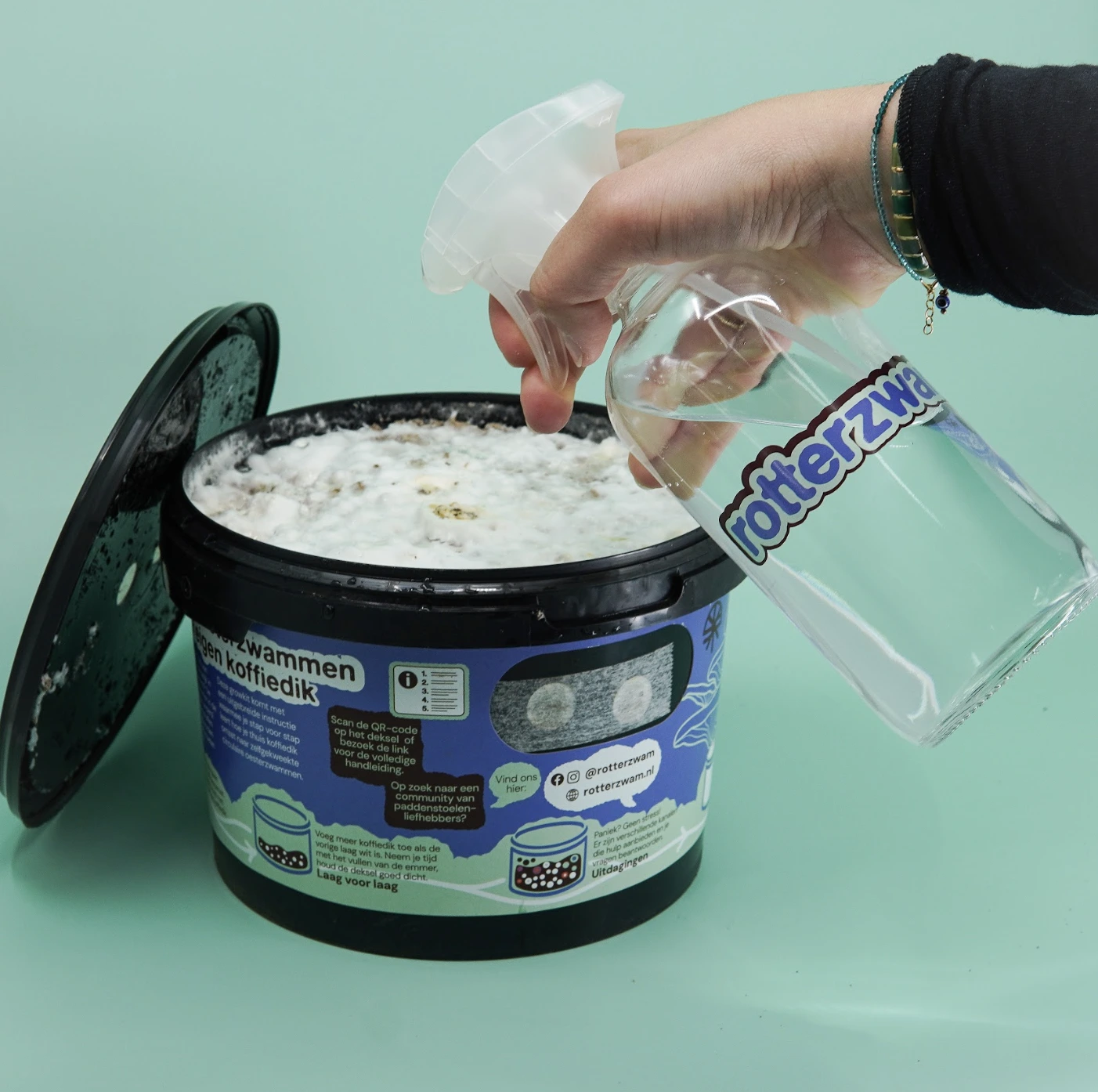
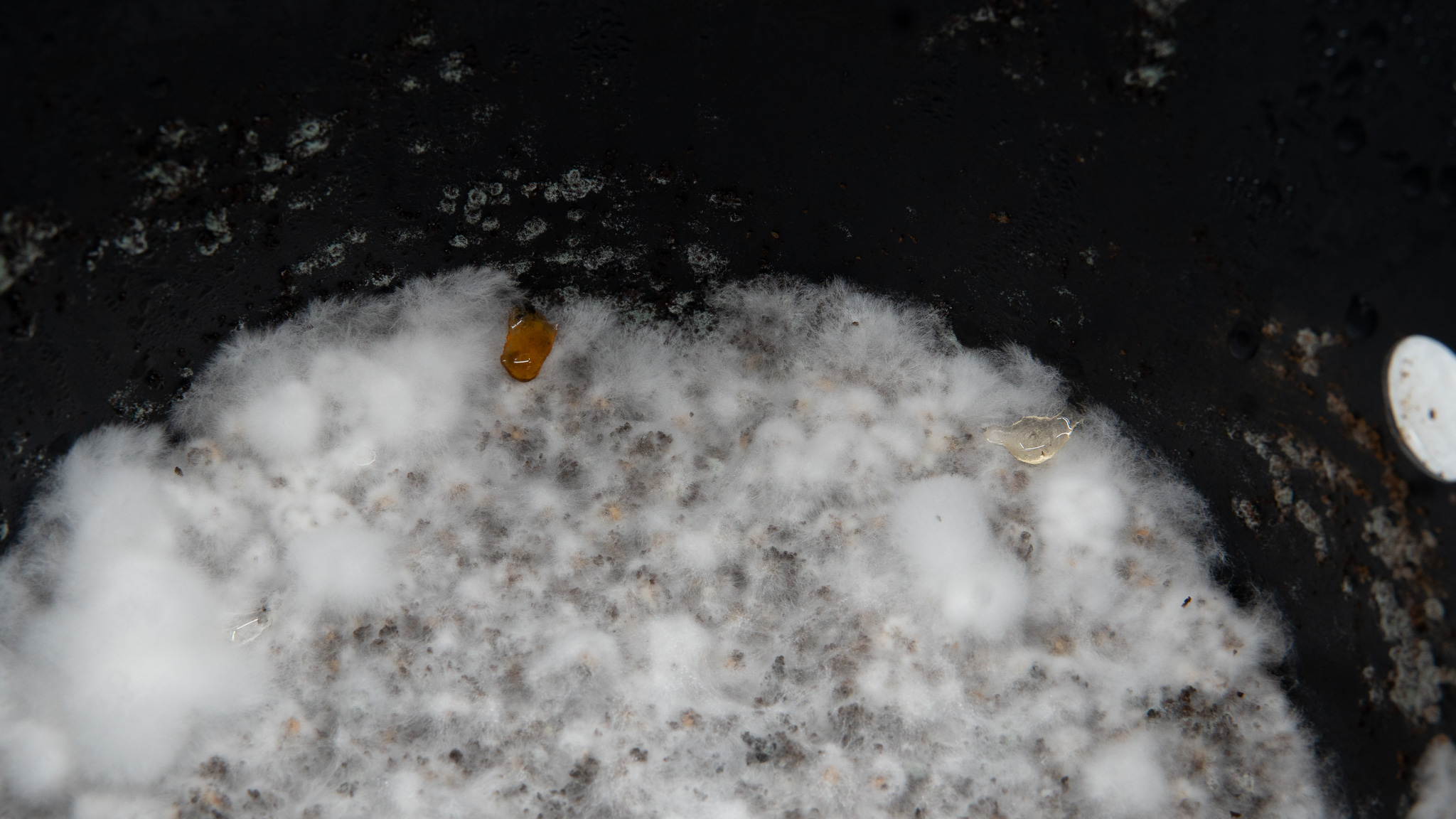
Once the mycelium has fully colonised the bucket and the top layer is completely white (like in the image), it can still take 2–3 weeks before mushrooms begin to grow. During this time, the mycelium is building up energy and preparing for the next phase, even if it doesn’t look like much is happening.
So if nothing seems off, there’s nothing you need to do. Just be patient and let the process run its course.
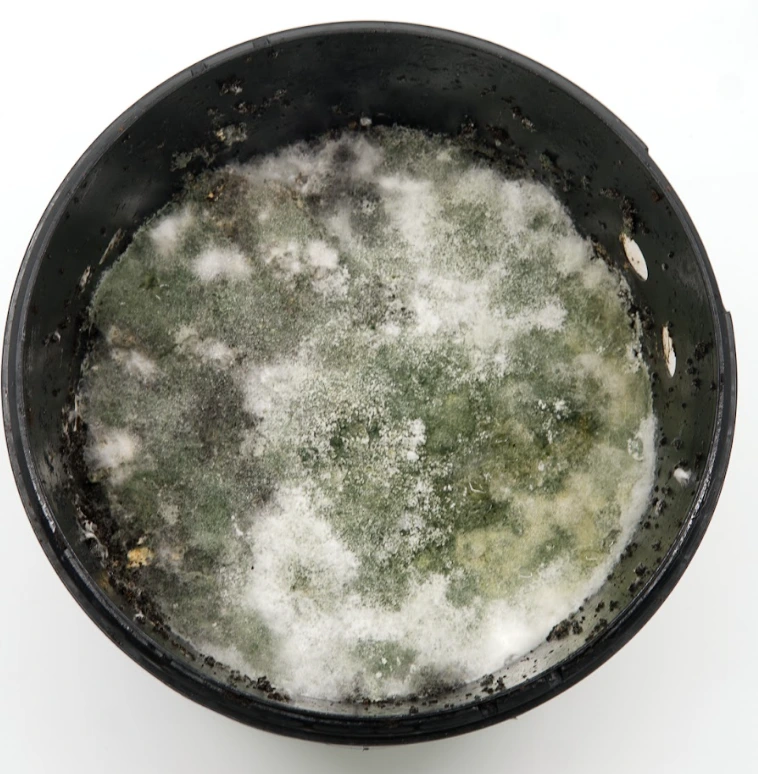
Green invader
Green mold — officially called trichoderma — is not the worst. Usually, your mushrooms can grow over it.
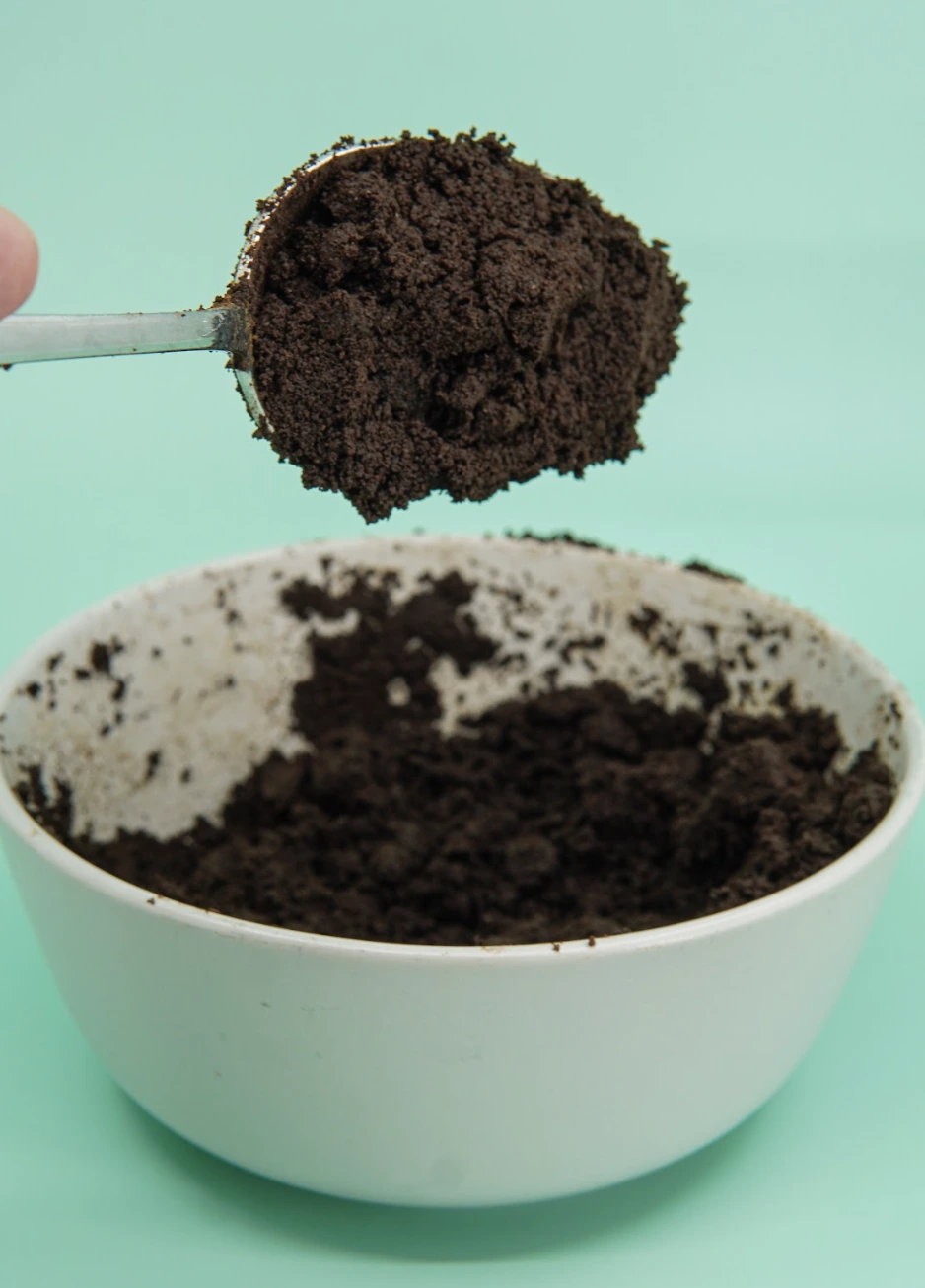
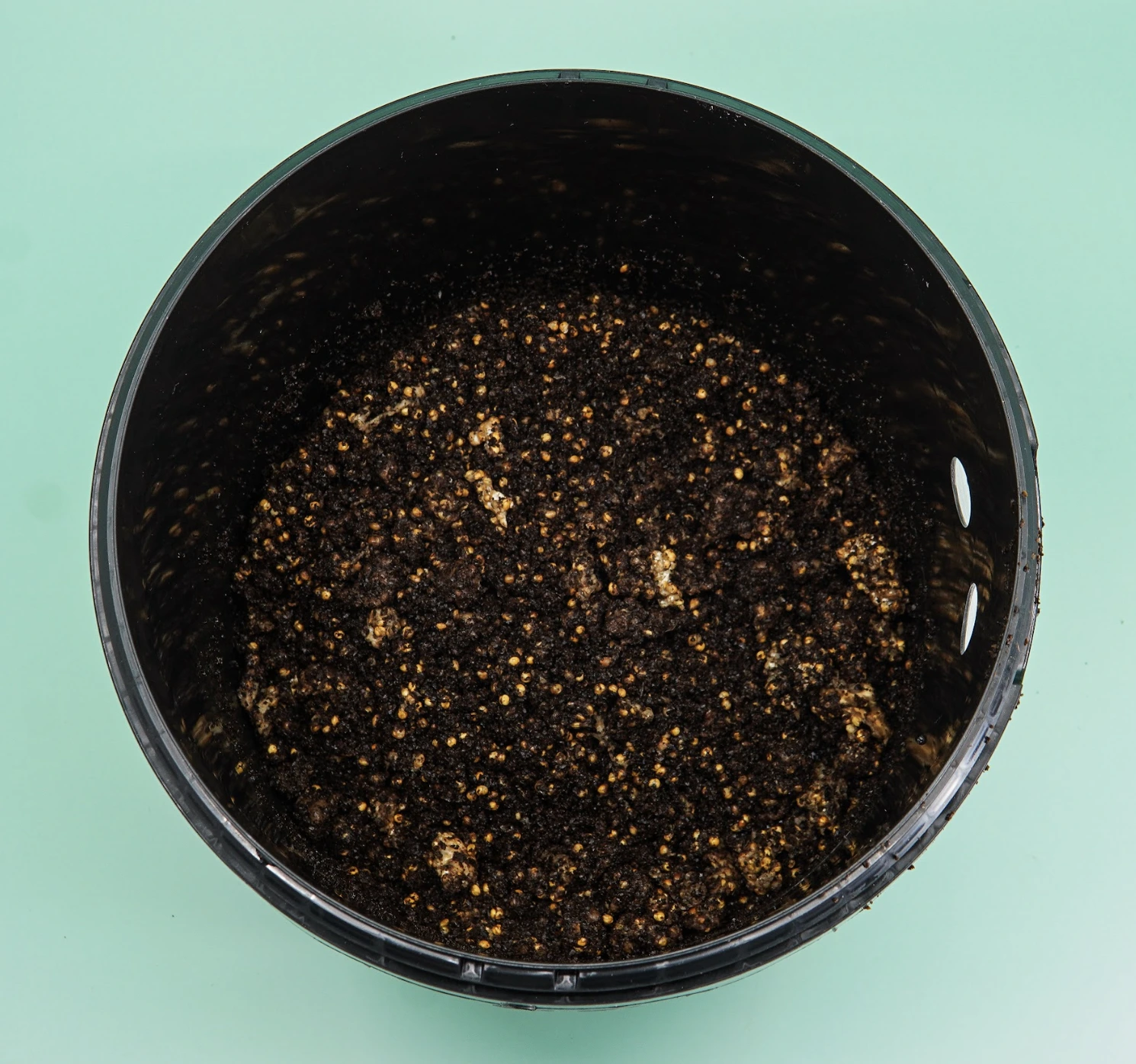
For the mycelium to grow, the coffee grounds must contain sufficient moisture. Trichoderma grows faster than the mycelium when you have dry coffee grounds, so make sure your coffee grounds have the right moisture.
Unfortunately, some coffee varieties are more susceptible to green mold infection. We suspect that the type of coffee, the roasting method, and the country of origin can influence fungal growth.
Check what others have experienced before you, and if the beans you are using are on the nice or naughty list: https://pollunit.com
Solution
Sterilize a spoon by stirring it in boiling water, and scoop the green infected grounds away. Then simply continue filling.
Can I still eat my mushrooms if there is green mold inside the bucket? Yes, it is two separate organisms. The mold does not affect the mushrooms. If you see mold on the oyster mushroom itself, it is better to not consume it.
Orange mold
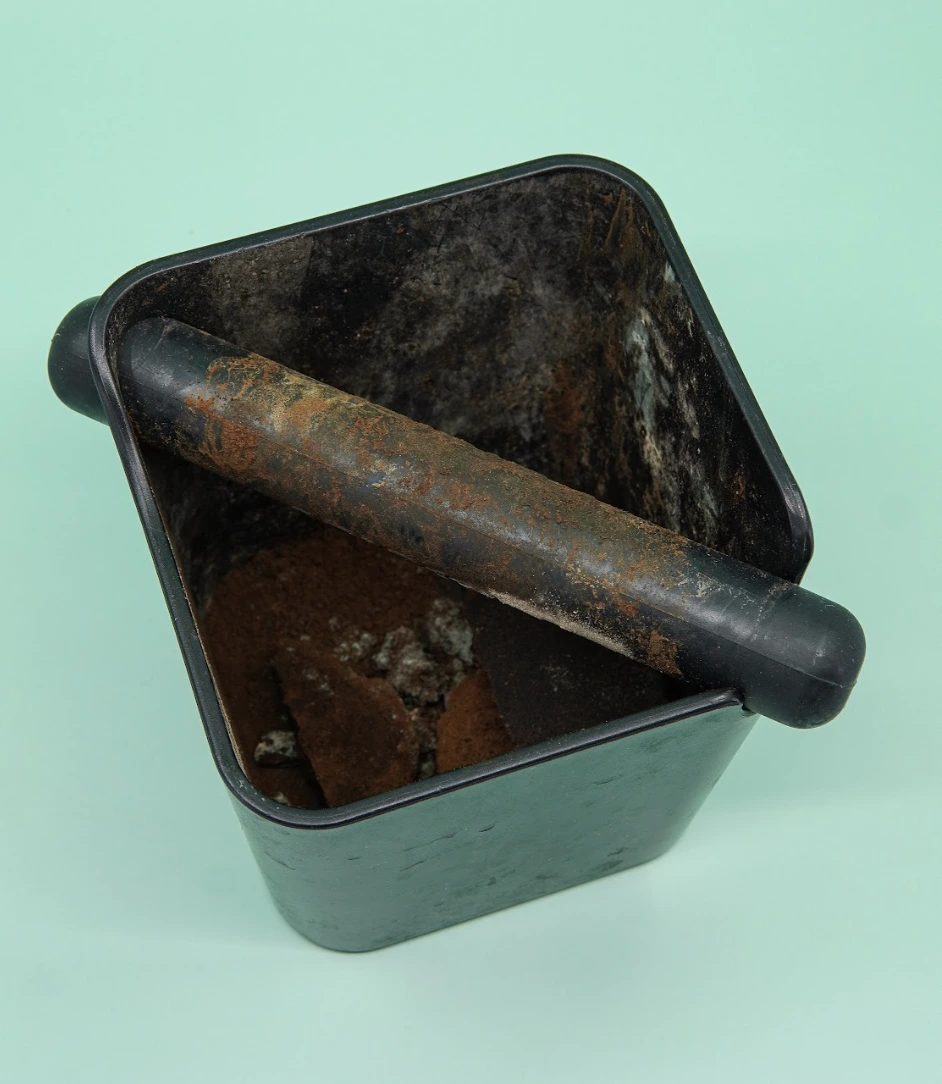
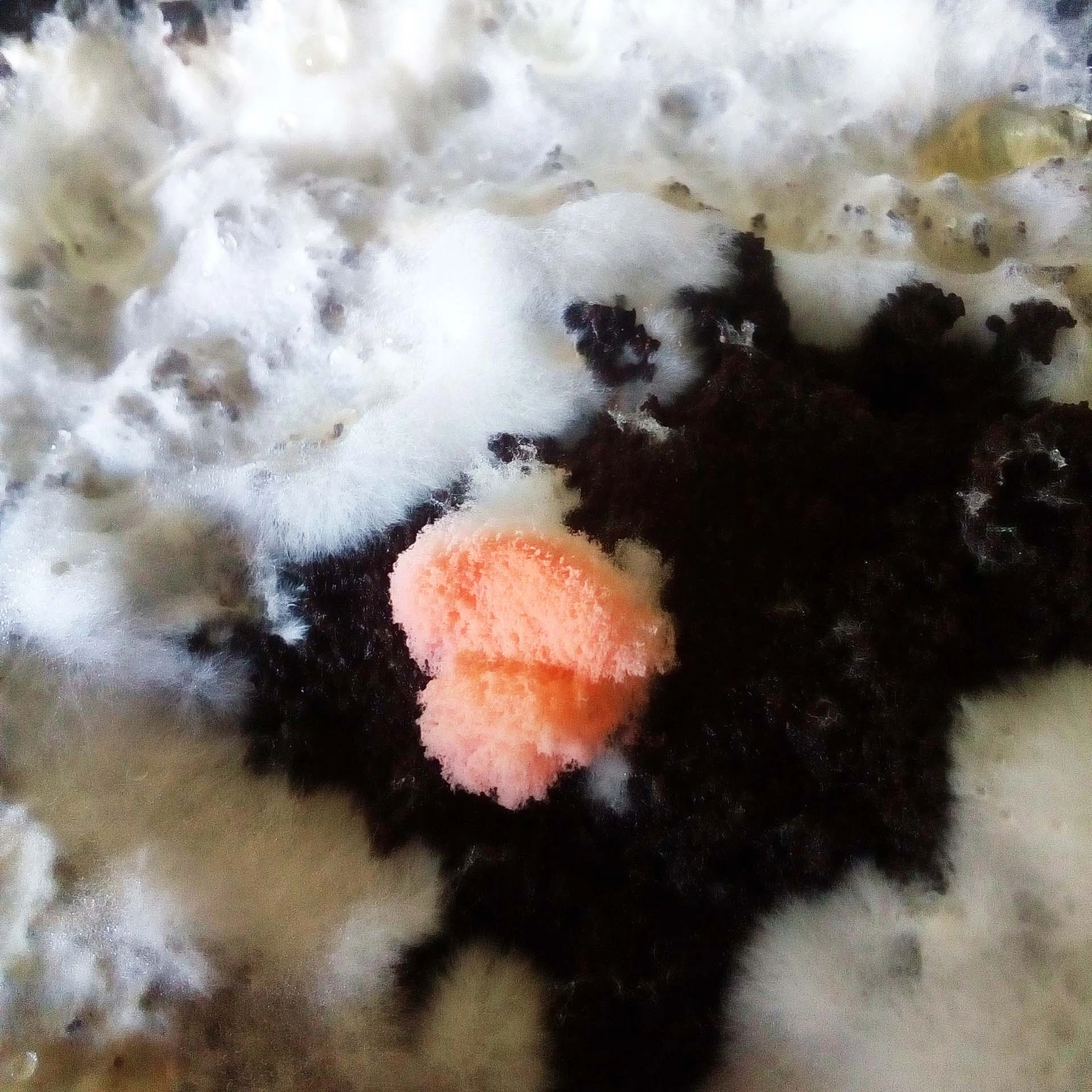
Orange mold is a type of Trichoderma, which usually grows in the summertime. It sometimes takes over, but usually the oyster mycelium wins.
Trichoderma is so competitive because it grows 2-3 times faster than oyster mycelium and produces antibiotics that inhibit other fungi. However, oyster mushrooms have their own defensive compounds.
It's a microscopic arms race! The mycelium is constantly fighting a biological war with various intruders. This costs a lot of energy that it can then not put into growing mushrooms. So help the mycelium win by eliminating the intruders as soon as possible.
Solution
Sterilize a spoon by stirring it in boiling water, and scoop the orange infected grounds away. Then simply continue filling.
Tiny visitors
Small flies/worms love the smell of mycelium and lay eggs in it. These flies are actually called Fungus gnats and look very similar to fruit flies.
It's important to keep the tape firmly in place so the flies can't access the grow kit. If this does happen, you can recognize it by a bare piece of mycelium, which has been eaten away by the Fungus gnats.
Solution
You can cut away a piece the size of a small coffee cup around this point, and then continue where you left off. Interestingly, fungus gnats are decomposers too, they're just competing with your mushrooms for the same food source.
In a garden compost, they'd be helpful. In your bucket, not so much!
Smelly growkit
Bad smells indicate anaerobic decomposition: bacteria thriving without oxygen. This is likely caused by overly wet coffee grounds. The smell might be sour, putrid, or like rotting garbage.
Solution
If they are, it's advisable to add dry coffee grounds to reduce the water-to-coffee-grounds ratio. If it keeps smelling, then you should consider starting over with new spawn.
Brown/Orange liquid
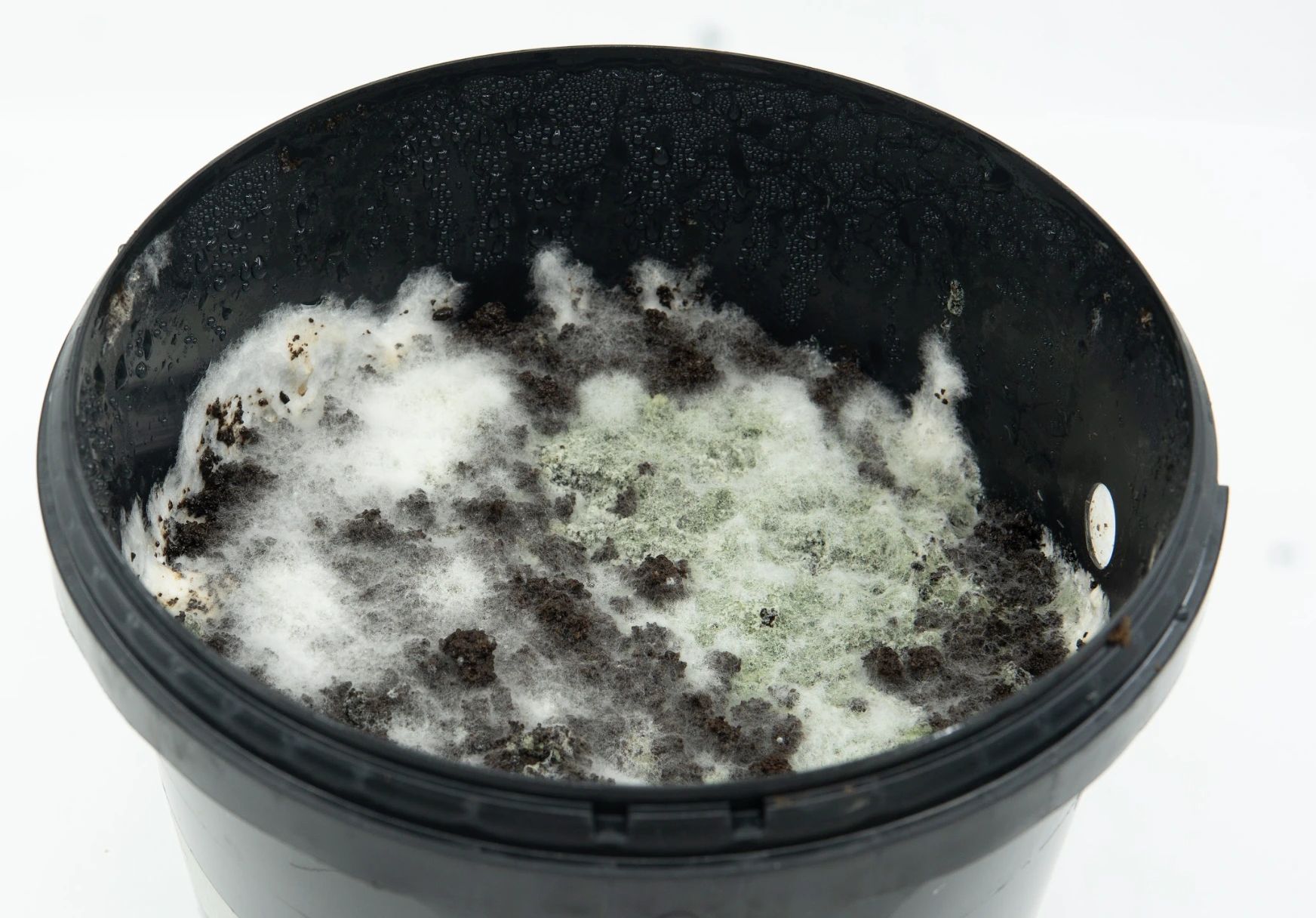
As mycelium matures, you might notice yellow or amber liquid pooling in spots. That brown stuff is enzyme activity from the mycelium, which is called "mycelium metabolite" or "mycelium exudate.
It's not orange mold, and it's nothing to worry about: it means your mycelium is active and your growkit is healthy. So a small amount is fine. However, excessive pooling might indicate the substrate is too wet or CO₂ levels are high.
When you restart the growkit in step 5, you use the brightest white bits of mycelium you can find on your grow kit. You don't need to carry that brown stuff over to the next round, you can compost it.
Mushrooms inside the bucket
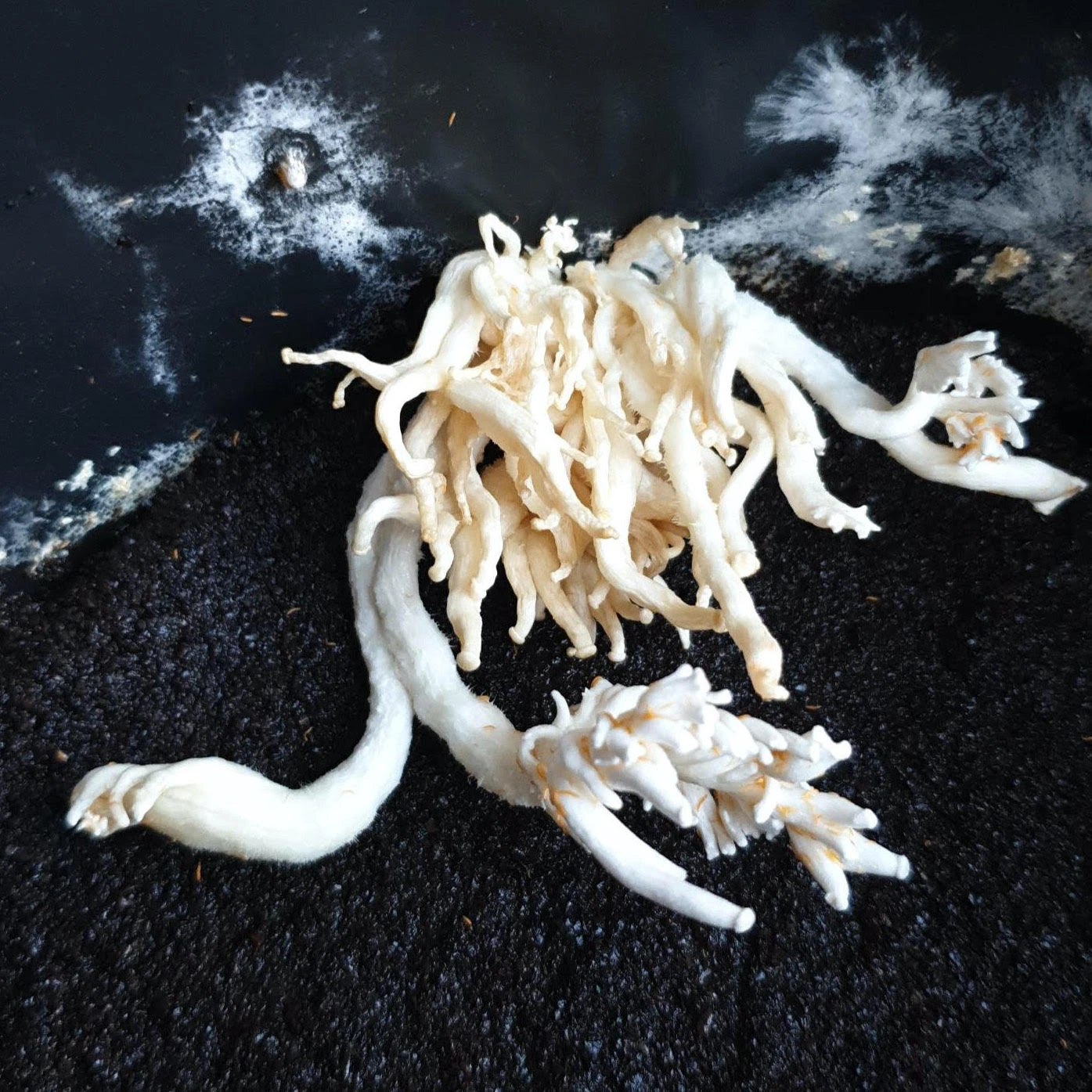
If the mycelium doesn't get enough nutrients, it panics and starts producing small, weird-looking mushrooms.
If you have these strands inside your grow kit, you waited too long to add new coffee. Premature fruiting is a stress response. When mycelium senses it might die (from lack of food, oxygen stress, or temperature shock), it produces mushrooms quickly to spread spores before it's too late.
If you have these strands outside your grow kit, it means that there isn't enough light for the mushrooms. Because there's no light, no cap will form.
Solution
Solve it by simply putting more fresh coffee grounds on top of this growth: the mycelium will grow through the new substrate again. What you can do to if these strings inside the bucket are bigger then 2 cm, is to cut the mushrooms out of the bucket. Then you can add a new layer of moist coffee grounds, through which the mycelium can grow again.
Solution for strings outside the growkit: provide a spot with plenty of light. The mushrooms will not develop perfectly, but they can still be eaten!